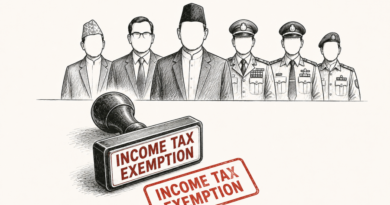
Security Strategy Unveiled: 80,000 Soldiers for Upcoming General Elections
In a major move to ensure national stability, the Government of Nepal has finalized an unprecedented Integrated Security Strategy for the upcoming House of Representatives elections scheduled for March 5, 2026.

The plan involves the mobilization of approximately 325,000 security personnel, including a core force of 79,000 soldiers from the Nepal Army. This deployment is being viewed as the most significant security operation in Nepal’s recent history, specifically designed to counter volatility following the 2025 “Gen Z” protests.
The Three-Tier Security Model
The Ministry of Home Affairs has structured the deployment in three concentric circles to ensure that polling remains “free, fair, and fear-free.”
- Inner Circle (Nepal Police & Myadi Prahari):
- Nepal Police: Roughly 72,000 personnel will be stationed directly at polling stations.
- Myadi Prahari (Temporary Police): Over 133,000 temporary officers have been recruited to manage queues and provide immediate crowd control.
- Middle Circle (Armed Police Force):
- Approximately 33,000 APF personnel will act as mobile “strike teams,” ready to respond to any disturbances or inter-party clashes near polling centers.
- Outer Circle (Nepal Army):
- The 79,000 soldiers will maintain a strategic perimeter. While they will not be inside the booths, they are responsible for securing critical infrastructure (airports, prisons, and ballot printing facilities) and providing the final backup layer.
Key Strategic Features of the 2026 Plan
- Early Mobilization
For the first time, President Ramchandra Paudel has authorized the deployment of the Army nearly 100 days prior to the election. This “pre-election” phase, which began in late 2025, involves active patrolling to prevent the formation of armed groups and to instill public confidence in the voting process.
- Addressing the “Escaped Inmates” Crisis
A primary focus of this year’s strategy is the containment of over 14,000 inmates who escaped during prison breaks in late 2025. Security forces are using high-tech surveillance and inter-agency intelligence to prevent these individuals from disrupting the electoral process or being used as “muscle” by political factions.
- Red-Zone Categorization
The government has classified polling stations into three categories:
- Highly Sensitive: Located in areas with a history of ethnic tension or high protest activity.
- Sensitive: Areas with intense political competition.
- General: Locations with low risk of disruption.
- Integrated Command Centers
The Central Integrated Election Security Committee, led by the Ministry of Home Affairs, will operate a 24/7 command center in Kathmandu. Similar committees have been established at the provincial and district levels (led by Chief District Officers) to ensure real-time coordination between the Army and civilian police.
The Challenges Ahead
While the sheer number of boots on the ground is impressive, the government faces significant logistical hurdles. The Nepal Police and APF reported losing dozens of vehicles and communications equipment during the previous year’s unrest. In response, the Finance Ministry has released an emergency budget of 7.8 billion NPR specifically for the Election Commission and security logistics.
“The presidential approval for early army mobilization is not a sign of military rule, but a guarantee for democratic exercise in a fragile environment,” stated a spokesperson for the Ministry of Defence.