High Costs and Unauthorized Satellite Use Plague Everest Base Camp Internet Services
KATHMANDU — Tourists and expedition organizers at the Everest Base Camp (EBC) have expressed growing concerns over the poor quality and high cost of internet services in the region. While wireless internet is now available 24 hours a day for both domestic and foreign climbers, users argue that the pricing remains excessively high, especially during the peak mountaineering season.

Local service providers defend their rates by pointing out the immense logistical challenges of operating in high-altitude environments and the seasonal nature of their business.
The Current Internet Landscape at EBC
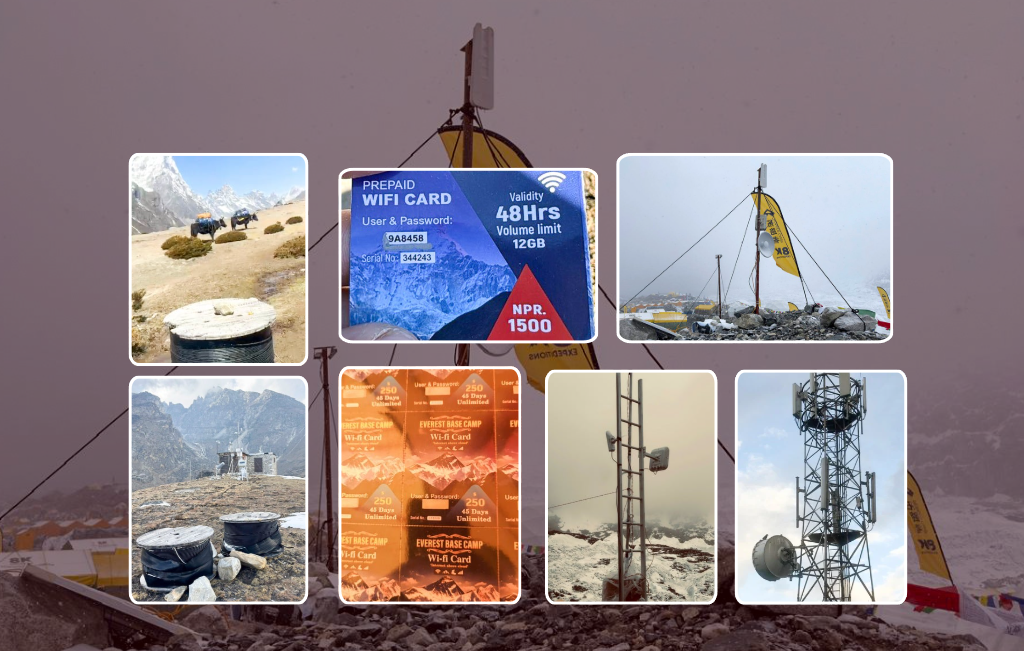
Currently, Nepali internet service providers (ISPs) like Everest Link and Air Link provide wireless services at the base camp. While state-owned Nepal Telecom (NTC) and private carrier Ncell have network towers up to an altitude of 5,100 meters, users report that these mobile networks rarely function during the peak climbing season and only offer basic connectivity during the off-season.
Representatives from local ISPs note that the necessity of setting up infrastructure for a short seasonal window significantly drives up operational costs. Standard monthly internet packages for locals range from 2,000 to 2,500 NPR, while packages for foreign climbers are priced higher. Providers emphasize that operating in complex geography and high-altitude zones is incredibly difficult, adding that their business is heavily impacted by unauthorized satellite services running in the area.
Expansion Plans by Telecom Giants
The absence of robust infrastructure from major telecom operators is widely seen as a primary reason for high internet costs. Addressing the issue, Nepal Telecom stated that the company is actively working to accelerate its network expansion in the region.
-
Dingboche: Upgraded to 4G services.
-
Lobuche to Gorakshep: Currently served by 2G networks.
-
Future Outlook: Equipment is actively being transported to lay optical fiber cables, with plans to bring high-speed internet to the region soon.
The Rise of Illegal Satellite Services
Frustrated by the limitations of local networks once they climb above the base camp, many expedition companies have turned to unauthorized foreign satellite internet providers. Local industry sources estimate that around 53 unauthorized satellite devices are currently operating in the Everest region.
The Nepal Telecommunications Authority (NTA) previously issued a strict public notice warning against this practice, noting that the use of foreign satellite internet violates domestic telecommunications laws. The regulator stated that expedition companies at high-altitude base camps must halt the unauthorized use of foreign telecom services immediately.
Despite the legal warnings, climbers place a premium on safety over regulatory compliance. Having reliable internet higher up the mountain is seen as a lifeline for communication during emergencies, accidents, or tracking missing climbers. Consequently, expedition companies prioritize setting up connectivity by any means necessary.
Regulatory Oversight and Failed Promises
The NTA had previously announced a campaign to provide free internet services at major tourist hubs, including the Everest and Annapurna Base Camps. However, stakeholders report that this initiative has been largely ineffective.
The regulatory authority acknowledged the complaints regarding high costs and stated that an evaluation of the situation is underway. While monitoring remains a challenge due to the difficult geographical terrain, the authority has maintained that strict action will be taken if evidence of illegal services or overcharging is found.