Nepal on the Eve of a Decisive Election
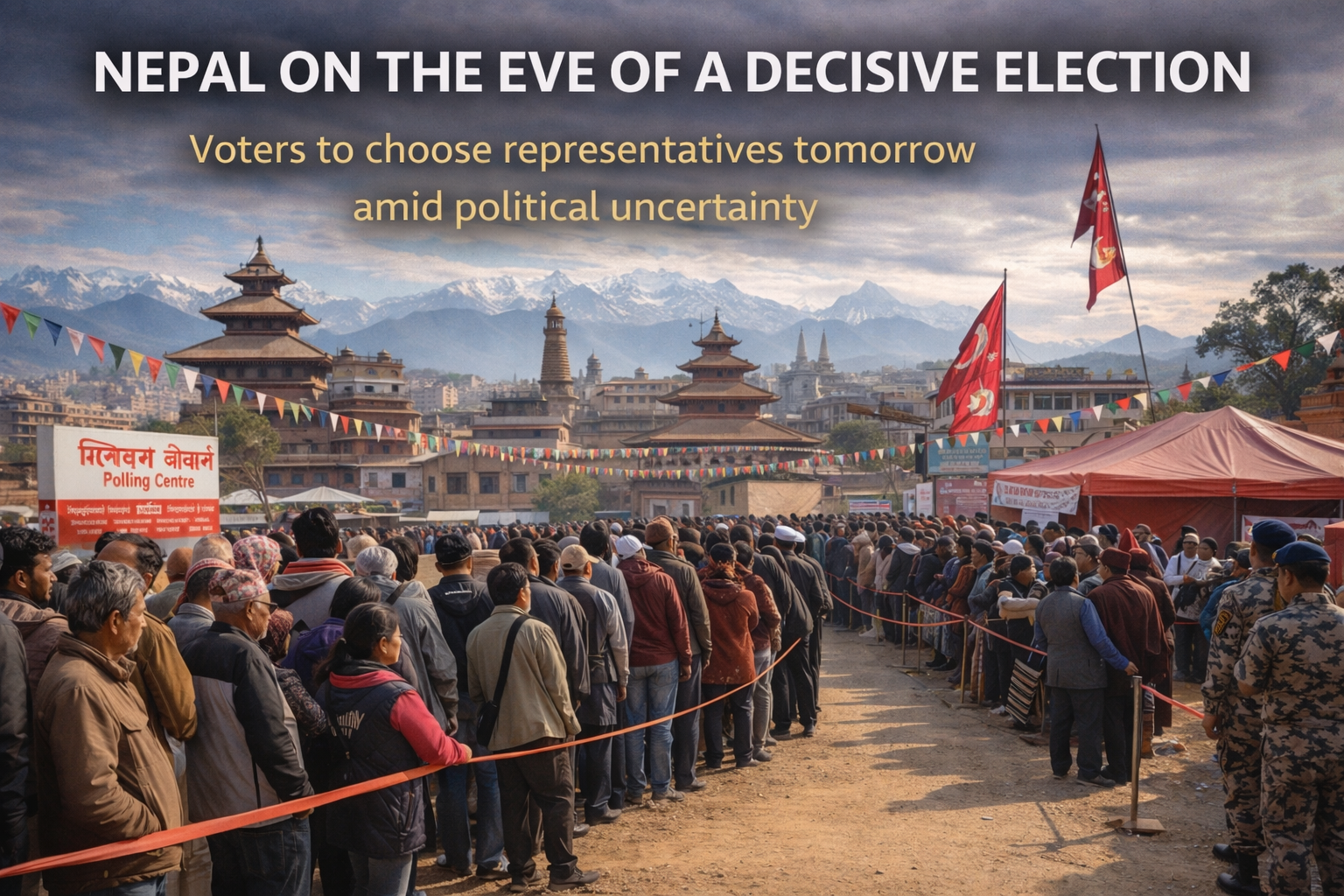
Nepal stands on the brink of a pivotal democratic moment as voters prepare to cast their ballots tomorrow. From the crowded lanes of Kathmandu to remote mountain settlements, anticipation is building. Political parties have concluded their campaigns with final rallies, door-to-door outreach, and strong appeals to undecided voters, urging citizens to shape the nation’s future through the ballot box.

This election arrives at a time when public expectations are high and frustrations are visible. Concerns over inflation, unemployment, governance stability, and development delays have dominated political discussions. Many citizens see this vote not merely as a routine electoral exercise, but as an opportunity to demand accountability and clearer direction from the country’s leadership.
Under Prime Minister Pushpa Kamal Dahal, Nepal has experienced shifting coalitions and evolving political alignments. Analysts suggest that tomorrow’s results could either reinforce the current balance of power or usher in significant changes within Parliament. Major political parties have framed the contest as a choice between stability and reform, while independent and emerging candidates are presenting themselves as alternatives to traditional power structures.
Youth participation is expected to play a critical role. With a large percentage of Nepal’s population under the age of 35, issues such as job creation, foreign employment migration, entrepreneurship, and digital innovation have taken center stage. University campuses and online platforms have become active arenas of debate, reflecting a generation eager for tangible progress.
Security arrangements are in place nationwide to ensure peaceful voting. The Election Commission has confirmed that polling centers are prepared and that necessary logistical measures have been finalized. Authorities have urged citizens to verify their polling stations and participate responsibly, emphasizing that voter turnout remains a cornerstone of Nepal’s democratic strength.
Political observers outline several possible scenarios: a clear majority that could offer stability, a fragmented mandate leading to renewed coalition negotiations, or a surge of new political figures reshaping parliamentary dynamics. Each outcome carries implications for governance, economic reform, and policy continuity.
As the nation waits for dawn, conversations in homes, tea shops, and marketplaces reflect a mixture of hope and skepticism. Regardless of political affiliation, tomorrow’s vote represents a defining chapter in Nepal’s democratic journey — a reminder that the power to influence the nation’s course ultimately rests with its people.