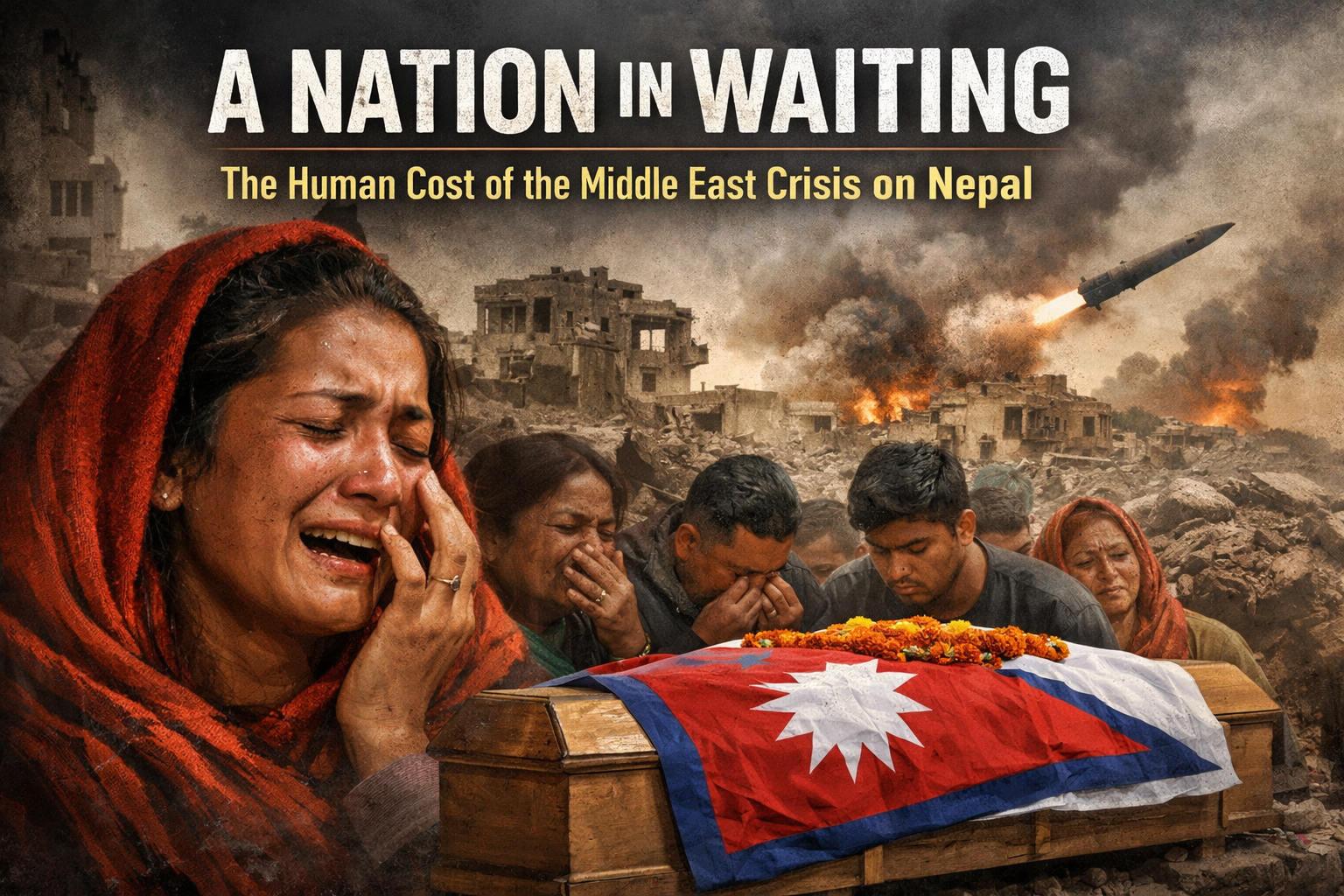
A Nation in Waiting: The Human Cost of the Middle East Crisis on Nepal
Kathmandu, March 3, 2026 – While the world watches the high-stakes military maneuvers between the US, Israel, and Iran, for millions of households in Nepal, the conflict is not a distant geopolitical game—it is a direct threat to their lives and livelihoods. With nearly 1.9 million Nepali migrant workers currently in the Gulf and West Asia, the escalating war has cast a dark shadow over the nation just as it prepares for its own historic general elections.

The Frontline: Workers in the Crossfire
As of today, the “safety of our brothers and sisters abroad” has become the primary concern for the Nepali government. The conflict shifted from “regional tension” to “personal tragedy” with reports of Nepali casualties.
-
Casualties Reported: The Ministry of Foreign Affairs (MoFA) has confirmed the tragic death of a Nepali national in Abu Dhabi following a drone strike at the international airport. Reports from Kuwait and Lebanon also suggest injuries to Nepali workers near military and energy installations.
-
Strategic Relocations: In the UAE and Qatar, companies have begun moving Nepali labor camps away from areas near US military bases and energy hubs, which have become primary targets for Iranian retaliatory strikes.
-
Workplace Paralysis: For those in construction and security—the two largest sectors for Nepalis—work has largely ground to a halt. Workers are being instructed to stay indoors to avoid shrapnel from intercepted missiles.
The Remittance Lifeline at a Standstill
Nepal’s economy is fundamentally fueled by the sweat of its migrant workers. Remittances account for over 25% of the national GDP, and the Middle East is the destination for nearly 80% of those workers.
-
Permit Suspension: In an emergency move, the Ministry of Labour has indefinitely suspended all new and renewal labor permits for key destinations, including Saudi Arabia, UAE, Qatar, Kuwait, and Israel.
-
The TIA Crisis: At Tribhuvan International Airport, the scene is one of heartbreak. Thousands of young men and women, who had taken out massive loans to pay recruitment fees, are now stranded as flights are cancelled. For families like Devi Sunar’s (whose son was bound for Saudi Arabia), the delay isn’t just about travel—it’s about the mounting interest on debts they can no longer pay.
-
Economic Forecast: Economists warn that a prolonged conflict could cause the monthly remittance inflow of Rs 200 billion to dry up, potentially leading to a domestic liquidity crisis and a spike in poverty.
Government Response: Preparation for a Massive Rescue
The Nepal government, often criticized for being reactive, has moved with uncharacteristic speed, recognizing the scale of the potential humanitarian disaster.
-
Rapid Action Team: A committee led by the Foreign Secretary has been formed to coordinate a potential mass evacuation.
-
Digital Tracking: MoFA has launched a mandatory Online Registration Portal for all Nepalis in the region. This is the first time the state is attempting to map the exact location of every citizen in the Gulf to streamline rescue efforts.
-
Diplomatic Appeals: Nepal has issued a formal call for “maximum restraint,” emphasizing that the sovereignty of nations must be respected to protect the millions of innocent civilians—including its own workforce—trapped in the region.
A Double Anxiety: War and the Ballot
The timing of the crisis is particularly cruel. Nepal is less than 48 hours away from its March 5 General Election.
-
Voter Sentiment: The fear for relatives in the Gulf has overtaken the usual election fervor in many villages. Candidates are being questioned more about their plans for stranded migrants than their local infrastructure promises.
-
Stranded Voters: Thousands of workers who had planned to return home to vote are now stuck at Middle Eastern airports, their voices silenced by the closure of regional airspace.
Important Safety Information for Families
If you have family members in the Middle East, the government urges you to ensure they:
-
Stay Indoors: Follow all local security directives and avoid unnecessary travel.
-
Register: Ensure they register their details on the official MoFA portal.
-
Emergency Contacts: Keep embassy numbers saved.
-
UAE Embassy: +971-508180280
-
Qatar Embassy: +974-66214419
-
Israel Embassy: +972-545582077
-