Global Fallout: Middle East Conflict Triggers Aviation Chaos and Economic Turmoil
March 3, 2026 – The escalating military conflict in the Middle East, spearheaded by coordinated US and Israeli actions against Iran, has plunged global aviation and the world economy into unprecedented chaos. As explosions light up the skies over Tehran and Beirut, and diplomatic relations fray, the ripple effects are being felt in airports, markets, and boardrooms across the globe.

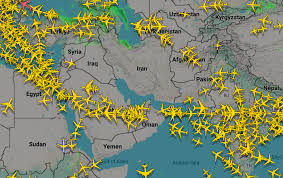
Aviation Grounded: Skies Over the Middle East Shut Down
The immediate and most visible impact of the burgeoning war is the near-total paralysis of air travel in and out of the Middle East. With Israeli airstrikes hitting key Iranian and Lebanese targets, and the US Embassy in Riyadh coming under drone attack, regional airspace has become a no-go zone.
Massive Flight Cancellations: Over 350 flights scheduled to West Asia were abruptly cancelled today, leaving tens of thousands of passengers stranded. Major international carriers have either rerouted or entirely suspended services through the region, grappling with rapidly evolving safety advisories and airspace closures. Dubai International Airport, a crucial global hub, has reportedly sustained damage, further compounding the logistical nightmare.
Stranded Travelers and Teams: The human cost of the travel disruption is immense. Travelers from various nations are stuck in transit hubs, while critical personnel movements are on hold. Notably, the West Indies cricket team, en route to a series, finds itself grounded in India, unable to proceed through the volatile airspace. The US State Department has ordered the evacuation of non-emergency personnel from its embassies in Bahrain, Jordan, Iraq, and Qatar, signaling the severity of the threat to American citizens in the region.
Economic Shockwaves: Oil Surges, Gold Hits Record Highs
The military escalation has sent immediate and dramatic shockwaves through global financial markets, with investors flocking to safe havens and critical commodity prices soaring.
Oil Prices Skyrocket: Crude oil futures have surged by over 8% today, pushing prices close to $80 a barrel. The specter of a prolonged conflict in the world’s most critical oil-producing region has ignited fears of supply disruptions. The most alarming threat comes from Iran’s Islamic Revolutionary Guard Corps (IRGC), which has issued stark warnings of shutting down the Strait of Hormuz. This narrow chokepoint is responsible for the transit of approximately 20% of the world’s daily oil consumption, and its closure would trigger an unprecedented energy crisis, paralyzing global industries and driving up consumer costs dramatically.
Gold’s Unprecedented Rally: In times of geopolitical uncertainty, gold traditionally serves as a safe haven, and today is no exception. The precious metal has reached an all-time high of $5,417 per ounce, as investors divest from riskier assets and seek stability amidst the chaos.
Market Volatility and Investor Fear: Beyond oil and gold, stock markets globally are exhibiting extreme volatility. Indices in Asia and Europe registered significant declines as the news of escalating conflict spread. Businesses are bracing for supply chain disruptions, increased operational costs, and a potential slowdown in global trade. The longer the conflict persists, the greater the threat of a severe economic downturn.
As the US and Israel intensify their military campaign against Iran, the world watches with bated breath. The immediate future promises continued aviation woes and severe economic pressures. The global community now faces the daunting task of navigating this rapidly unfolding crisis, where geopolitical tensions directly translate into tangible disruptions for everyday citizens and fundamental economic stability.