
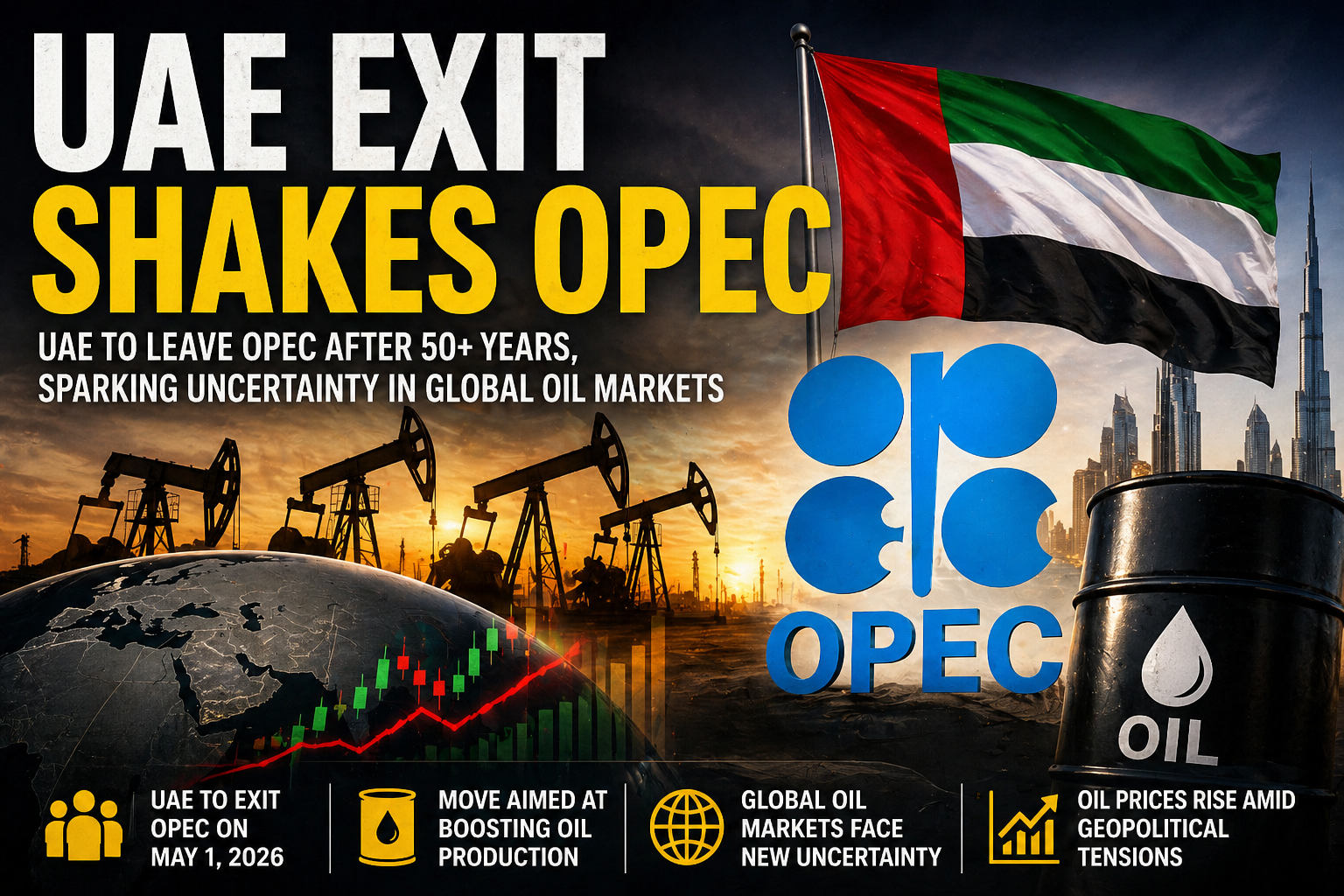
UAE Exit Signals New Uncertainty for OPEC and Global Oil Markets
A major shift in the global energy landscape unfolded this week as the United Arab Emirates announced its decision to withdraw from the Organization of the Petroleum Exporting Countries, marking one of the most significant developments in the oil industry in decades.

The UAE, one of the group’s key producers, is set to formally leave the alliance on May 1, 2026, ending more than half a century of membership. The move is widely interpreted as a strategic step to expand its oil production capacity independently, free from the output quotas imposed by OPEC.
Energy analysts say the decision could weaken OPEC’s collective influence over global oil supply and pricing. For years, the organization—led by major producers including Saudi Arabia—has played a central role in stabilizing markets by coordinating production levels among member states.
The departure comes at a time of heightened volatility in global energy markets. Ongoing geopolitical tensions in the Middle East, particularly around the strategically vital Strait of Hormuz, have contributed to rising oil prices and supply uncertainties. Benchmark crude prices have climbed significantly, intensifying concerns among energy-importing nations.
Despite recent efforts by OPEC and its allies—collectively known as OPEC+—to modestly increase production, the group faces challenges in meeting output targets. Several member countries continue to struggle with capacity limitations and operational constraints.
Industry experts believe the UAE’s exit may encourage other producers to reassess their positions within the alliance, potentially reshaping the balance of power in global oil governance. However, some analysts suggest that the immediate impact on oil prices may be limited, as market fundamentals remain driven by broader geopolitical and economic factors.
For countries heavily dependent on fuel imports, including many in South Asia, the evolving situation could have direct implications for inflation and energy security. Policymakers are expected to closely monitor developments as markets adjust to the changing dynamics.
As the global energy sector navigates this period of transition, the long-term consequences of the UAE’s departure from OPEC remain uncertain—but its significance is undeniable.


