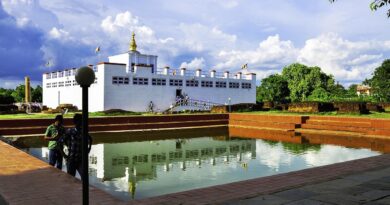
Pharping Hydropower Station: The First Hydropower Plant in South Asia
The Pharping Hydropower Station holds a unique place in South Asian history as the region’s first hydropower plant, symbolizing the early adoption of renewable energy in Asia. Commissioned in 1911, Pharping was established near the village of Pharping, about 12 kilometers south of Kathmandu, the capital of Nepal. This achievement underscored Nepal’s early commitment to sustainable energy and placed it ahead of many nations in harnessing hydroelectric power. The Pharping Hydropower Station, originally known as Chandra Jyoti Hydropower Plant, was named after Prime Minister Chandra Shamsher Jang Bahadur Rana, who was instrumental in its development.

In the early 20th century, Nepal was an isolated kingdom with limited infrastructure and industrial development. The ruling Rana Prime Ministers, who governed Nepal as autocrats, sought to introduce modernization and infrastructure development, particularly in Kathmandu. Recognizing the potential of hydroelectric power, Prime Minister Chandra Shamsher initiated the project to electrify parts of Kathmandu. The aim was to use Nepal’s abundant water resources to generate power, reduce dependence on imported kerosene and other fuels, and demonstrate the technological progress of Nepal.
he Pharping Hydropower Project was developed in collaboration with British engineers, as Nepal had limited technical expertise at the time. It was built using water diverted from the Sundarijal River, which has a strong flow year-round due to Nepal’s monsoon-fed rivers. The plant was designed to generate 500 kilowatts (kW) of electricity, a remarkable achievement for the time. It was powered by a pelton-type turbine, a technology used to harness energy from high-head water flows, suitable for mountainous regions like Nepal.
Key aspects of the project included:
- Water Diversion: The plant utilized water diverted from the nearby Sundarijal River, which was channeled through a system of canals and pipes to the powerhouse at Pharping.
- Powerhouse: The powerhouse building was constructed with durable materials to withstand the natural elements and remains a historical landmark today.
- Transmission Lines: Pharping initially supplied electricity through a simple transmission network that reached various parts of Kathmandu, especially the royal palaces and administrative centers.
The station’s 500 kW capacity, though modest by today’s standards, was sufficient to meet the early electricity needs of Kathmandu.
The completion of the Pharping Hydropower Plant brought electricity to Kathmandu for the first time, changing the lives of its residents. The availability of electric lighting improved safety, increased productivity in households and government offices, and reduced dependence on kerosene lamps. The plant’s impact on Nepal’s capital was transformative, and the lighting of government offices and royal palaces became a symbol of Nepal’s progress.
The project also highlighted Nepal’s abundant water resources as an energy source, planting the seed for future hydropower development. Though electricity was initially limited to the elites and government buildings, the project demonstrated the potential of hydropower as a clean and reliable source of energy, paving the way for later projects and inspiring future developments in renewable energy.
Due to Nepal’s lack of technical expertise, maintenance of the Pharping Hydropower Plant posed significant challenges. As a pioneering plant, it required regular upkeep to maintain its machinery and ensure uninterrupted service. Over time, the plant encountered issues with sedimentation, as monsoon rains often brought debris into the waterways. Additionally, the remote location posed logistical challenges, with limited access to spare parts and technical support. British engineers were involved in the initial maintenance efforts, but eventually, Nepalese engineers and technicians were trained to manage and operate the plant.
The Pharping Hydropower Station is a landmark in the history of South Asia’s energy sector and remains a point of pride for Nepal. It symbolizes the early technological aspirations of the country and stands as a reminder of Nepal’s pioneering role in renewable energy. Over the years, Pharping has been recognized as a historical site, and its legacy has inspired the expansion of Nepal’s hydropower potential. Today, Nepal’s hydropower sector has grown significantly, with projects generating hundreds of megawatts of electricity to power the nation and even supply energy to neighboring countries.
Pharping also represents the importance of adapting technology to local resources and natural conditions, showcasing how Nepal, with its vast network of rivers and waterfalls, can sustainably generate power. As a historical relic, the Pharping Hydropower Plant has been preserved and is occasionally open to visitors, both as a tourist attraction and a symbol of the country’s early modernization.
Nepal’s success with Pharping laid the foundation for the future of hydropower in the country. Today, Nepal has over 1,500 MW of installed hydropower capacity, and the sector is seen as one of the country’s economic backbones. Hydropower is viewed as a potential export product, with significant investments aimed at exporting electricity to India and beyond.
The Pharping Hydropower Station was a modest project, but it influenced the direction of Nepal’s energy policy and demonstrated how a small, landlocked, and resource-limited nation could utilize its natural resources. The project has also inspired hydropower engineers, historians, and policymakers in Nepal to continue focusing on renewable energy development.
The Pharping Hydropower Station is not only the first hydropower plant in South Asia but also an enduring symbol of Nepal’s early commitment to sustainable energy. Its commissioning in 1911 demonstrated that hydropower could be harnessed in Nepal’s challenging geography, leading to electrification, modernization, and eventual economic development. The plant is a testament to the vision of Nepal’s leaders and remains an important heritage site in South Asia’s energy history. Pharping’s legacy as the birthplace of hydropower in South Asia continues to inspire Nepal’s ongoing journey toward energy self-sufficiency and regional energy collaboration.