The chariot procession of Arya Avalokitesvara / Seto Machindranath : The God of harmony & compassion
Kathmandu Valley has various vibrant cultures that reflect its civilization and tradition. Celebrating different festivals while also embracing the natural aspect is a part of the kathmandu culture.

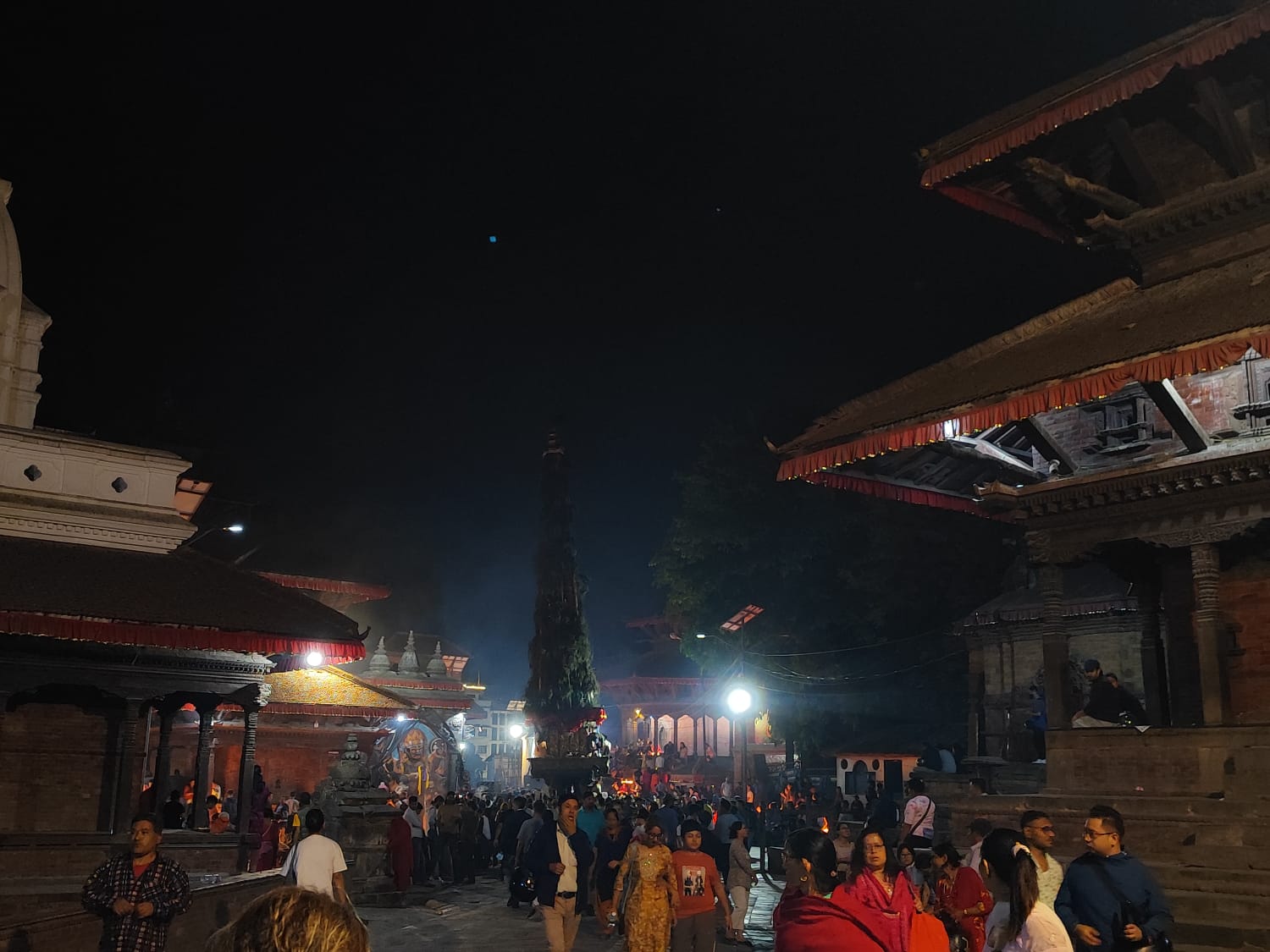
The symbol of religious tolerance and the god of harmony and compassion Arya Avalokitesvara /Seto Machhindranath/ Janmadhyo chariot procession starts every year from Chaitra Shukla Ashtami – Chaite Dashain. On the day of Chaitra Shukla Ashtami, the pinnacle style chariot of Seto Machhindranath is paraded around kathamandu city. On the first day, the chariout is paraded from Jamal via Ratnapark to Bhotahiti, Asan. On the next day the chariot is paraded from Ason to Hanuman Dhoka. Similarly, on the third day the chariot is paraded from Hanumandhoka to Lagantol via Maruhiti and Jaisedeval. After the chariot reaches Lagan, the idol of the lord is paraded aronud the temple of seto machindranath’s mother and a sacred tree locally referred as Ma Sima.
On the last day of the Rath Yatra (chariot parade), as the chariot reaches Lagan, the living goddess Kumari pays a visit to Seto Machindranath. Thousands of devotees grace the event singing and dancing, playing traditional musical instruments along with various Gods and Goddesses. Similar parade is performed in Lalitpur and Dolkha district locally referred as the Bung Dhya Jatra.

The Jatra concludes after the idol of Arya Avalokitesvara /Seto Machhindranath is carried on a hand held chariot and taken to the main Janabahal Temple via various core city towns.Before the advent of the republic, the head of state or any kings did not participate in this festival. But after the establishment of the Republic, it has been customary to invite the Head of State or the President to participate in the first day of the Jatra.
This Jatra , which takes place from the day of Chaitra Shukla Ashtami, starts in Pahela or Paush month according to the Nepali calendar. Every year in the month of Paush, on Shukla Paksha Ashtami, Seto Machhindranath is bathed in Janbahal of Keltol in Kathmandu following Buddhist tradition. When Seto Machhindranath is bathed, the idol is brought out of the temple and seated on a throne with seven snakes in the ancient courtyard in front of the temple. And bathing ceremony is perfomed from holy water stored in 6 copper containers. Panchatal baja continues to play while the bathing ceremony is being performed. Before bathing, the main Guruju (priest) of Seto Machchindranath worships ten dikpalas according to Buddhist tradition in ten directions. Living Goddess Kumari also participates in this program. Lord Setto Machchindranath’s is taken the deity’s own position in the temple after the rituals of caste karma, name karma, Annaprasana, upanayan, chudakarma, belabiwaha & gufa ceremony according to Newari Buddhist tradition on the day of Paush Shukla Purnima.
In this context, the deity is also served Thayabhu (a large platter of food served at the time of marriage). There is a popular belief that if the offering of this Thayabhu is given to an unmarried girl, then there is no need to get married. There is also a popular belief that a son will be born if those who do not have a son take this offering. It is customary to sprinkle the holy water from Seto Machhindranath temple to purify the house during the death ceremony. It is also said to keep away pests and rhodents. Sida (an offering to ancestors) is offered n in the name of deceased relatives and family members. It is believed that the deceased will attain nirvana when the sida is offered. A butter lamp is lit to bring happiness, peace and well-being to oneself and one’s family. If a person is sick to the point that it is difficult to recover, the special chants of the machindranath is recited. Pancharaksha, Navyakarana, Pragyaparamita etc. is recited. It is believed that the disease will be cured when the special chants are recited. People also recite the Nirvana chant in the name of deceased relatives. It is believed that if one participates in Seto Machindranath’s Jatra, family happiness, peace and prosperity will be maintained.
The symbol of religious tolerance, the white Machhindranath is worshiped as Shiva by the Shaiva sect, as Shakti by the Shakta sect and as Arya Avalokitesvara by the Mahayana and Bajrayana sects. The Fourth Day Ritual On the fourth day of the Jatra, there is a tradition of going to see lord Seto Machindranath. The basic concept of the fourth day ritual (Pyenhu Bicha) is to meet the deity after the pilgrimage. Nowadays, this tradition has decreased, but some people still go during this time with fruits and other offerings and to meet the deity.
The Myth
During the reign of the then King of Kathmandu, Yaksha Malla, it was believed that if one bathed in the river and graced Swayambhunath, he would go to heaven. One day Yamaraj, the god of death, learned about this power of Swayambhunath and came to visit Swayambhunath. When Yamraj came to the valley, King Yaksha Malla found out and held Yamaraj prisoner and asked for the boon of immortality for release. Imprisoned, Yamaraj prayed to Arya Avalokitesvara for his salvation, and after listening to Yamaraj’s prayer, Avalokitesvara himself appeared from the water. The deity told the king that neither him or the Yamraj could make him immortal and then ordered King Yaksha Malla to build temples at Kalimati and Bagmati to meet him and said that everyone who enters and worships in the temple will live a long life. The lord is said to have made the king promise, who had no choice but to release Yamaraj. The god also instructed the king to organise a rath yatra every year beginning on Chaitra Shukla Ashtami . According to another popular legend, the Seto Machhindranath idol was found in the fields of Jamal region in ancient times when a Jyapu(local farner) was working in his field, and afterwards he hid the idol inside his store in his house. But later he found out that his supplies never decreased after that incident. Later the idol was installed in Janbahal. According to the same tradition, even now, there is a custom of making a chariot at the place where the idol was believed to be found.
The Four Lokeshwaras
There are four Lokeshwars in Kathmandu Valley. The Seto Machhindranath is worshiped as the god of harmony, Anandadi (Aadinath) Lokeshwar of Chobhar who manages disease and divorce, Rato Machhindranath of Bungmati as the god of rain and time, Srishtikanta Lokeshwar of Nala is worshiped as the god who manages creation and destruction.
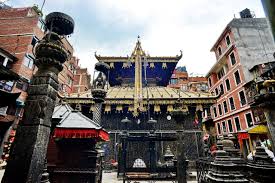
(Seto Machindranath / Arya Avalokitesvara /Janmadhyo – Janabahal, Kathmandu)
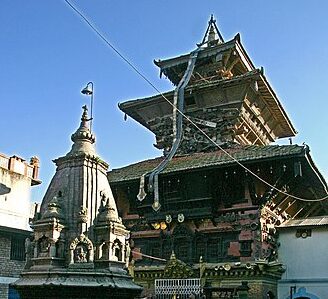
Anandadi (Aadinath) Lokeshwar, Chobhar, Kathmandu

(Rato Machhindranath, Bungmati, Lalitpur)
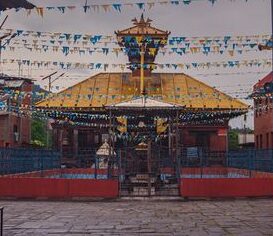
(Srishtikanta Lokeshwar/ Nala, Banepa)
(By : Yagyambar Shrestha)