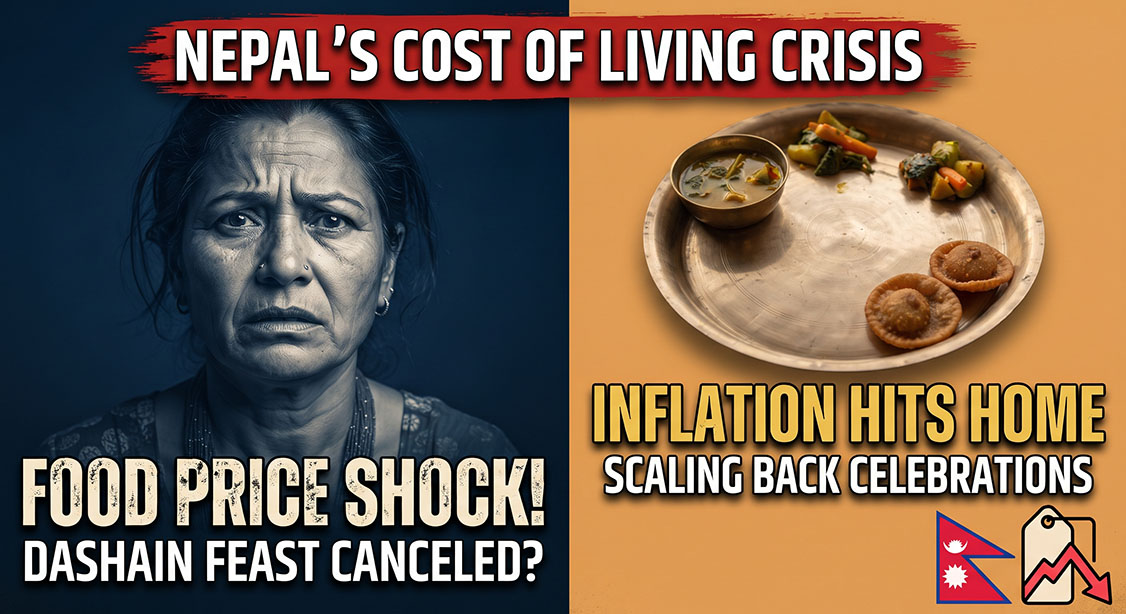
Dashain Food Price Shock: Nepalis Scale Back Celebrations as Inflation Bites
For many Nepali families, the traditional culinary centerpiece of Dashain—a feast centered on rich mutton curry, selroti, and spiced vegetables—was significantly scaled back this year due to an acute cost-of-living crisis. Ground reports from across the Kathmandu Valley on Kartik 5, the day after Bijaya Dashami, confirm widespread consumer distress over soaring food prices, revealing a stark economic reality behind the festive facade.

Hyperinflation Hits the Kitchen Data released by the Nepal Retail Traders Association just prior to the festival highlighted staggering price hikes on essential commodities compared to the previous year. Mustard oil, a kitchen staple, saw a dramatic jump, as did black lentils, turmeric, and other key ingredients necessary for traditional Dashain cooking. Perishable goods were not spared; the wholesale price of tomatoes and other vegetables climbed steeply, placing immense pressure on household budgets.
Acute Shortages Exacerbate Price HikesBeyond price inflation, consumers faced the added burden of supply shortages. Throughout the pre-Dashain period, long queues were a common sight outside gas depots as families struggled to secure cooking gas cylinders, forcing many to revert to inefficient kerosene or electric stoves. This scarcity created a black market for fuel, further inflating the real cost of preparing festive meals.
A Quiet Feast Interviews with residents in Lalitpur and Kathmandu revealed that many families were forced to make difficult economic choices. Households cut down on the quantity of meat purchased, reduced the variety of dishes prepared, or abandoned traditional time-intensive items like selroti altogether because ingredients were deemed too expensive. For daily-wage earners and low-income households, the gap between their earnings and the cost of a celebratory meal proved insurmountable, transforming this Dashain into a period of economic constraint rather than abundance.
The sharp spike in food prices during Nepal’s primary festival season serves as a worrying indicator of broader economic instability, reflecting underlying issues in supply chain management and the devastating impact of inflation on the purchasing power of ordinary citizens.