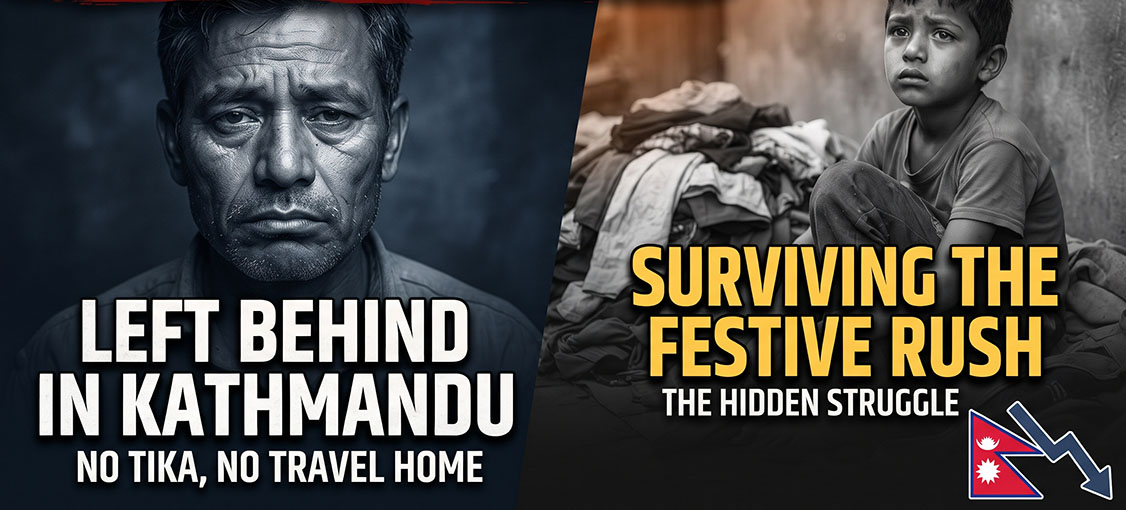
Daily-Wage Earners in Kathmandu Struggle Amid Festive Rush
While the rest of Nepal erupted in the vibrant colors, communal feasts, and celebratory gatherings of Bijaya Dashami on Wednesday, a starkly different reality played out for thousands of daily-wage earners and informal laborers in the capital. For this vulnerable segment of the urban population, the country’s greatest festival was not a holiday of abundance, but a painful reminder of their economic marginalization amid soaring living costs.

A Festival Beyond Reach Ground reports from major transport hubs, construction sites, and wholesale markets in Kathmandu revealed a somber atmosphere among laborers who migrated from outside the valley. Traditionally, Dashain is a time for mass exodus from the city as urban workers return to their ancestral homes to receive tika and blessings from elders.
This year, however, exorbitant festive bus fares—often double or triple the normal rate—made the journey home financially impossible for many. Laborers working on daily wages, typically earning between Rs 800 to Rs 1,200 per day, reported that the cost of a single round-trip ticket consumed more than a week’s worth of income, forcing them to remain in Kathmandu.
The Burden of Rising Costs Even for those who stayed in the city, the festive spirit remained out of reach. With inflation driving up the price of essential food items and festive goods, laborers struggled to afford even basic celebratory meals.
The emotional toll was most visible among parents working in the informal sector. Many expressed deep distress over their inability to purchase new clothes, shoes, or toys for their children—a near-universal Dashain tradition in Nepal. While middle-class families crowded department stores for festive shopping, daily-wage earners frequented second-hand clothing stalls or simply went without.
Neglect by State and Society Labor rights advocates have pointed out that daily-wage earners constitute a “forgotten demographic” during major national holidays. Unlike formal sector employees who receive Dashain bonuses (equal to one month’s salary), informal laborers have no such safety net. Without work during the multi-day public holiday, their income ceases entirely, exacerbating their precarious financial situation.
While various charitable organizations and community groups distributed food packets to stranded travelers and vulnerable populations in Kathmandu on Dashain day, reports suggest these relief efforts were insufficient to meet the widespread need.
For the daily-wage laborers of Kathmandu, this Bijaya Dashami highlighted the widening gap between festive rhetoric and the economic reality faced by the urban poor, transforming a national celebration into a quiet struggle for survival.