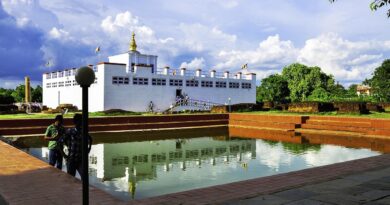
Janaki Temple: An Icon of Cultural and Spiritual Significance
The Janaki Temple, also known as the Temple of Janakpur or Janaki Mandir, is one of the most revered sites in Nepal, with profound cultural and religious significance for both Nepalese citizens and the Indian diaspora. Located in the city of Janakpur in the Dhanusa district of southeastern Nepal, the temple is dedicated to Goddess Sita (also called Janaki), the beloved consort of Lord Rama in the Hindu epic Ramayana. The temple draws devotees from across Nepal and India, highlighting the shared cultural heritage and deep spiritual ties between the two nations.

Architectural Grandeur and Historical Legacy
The Janaki Temple in Janakpur, Nepal, was not built by King Janaka, the legendary father of Goddess Sita. It was actually built much later, in 1910, by Queen Vrisha Bhanu of Tikamgarh, India. Queen Vrisha Bhanu commissioned this temple as an homage to Goddess Sita, who is believed to have been born in the ancient Mithila kingdom ruled by King Janaka, and whose story is central to the Ramayana epic. The Janaki Temple is an architectural marvel of the Koiri-style, a fusion of Mughal and Rajput design elements, featuring intricate marble work, stained-glass windows, and colorful domes. Covering an area of 4,860 square feet, the temple is the largest of its kind in Nepal and boasts a three-story structure with 60 rooms adorned with colored glass, silver doors, and elegant carvings. This majestic structure is a popular pilgrimage destination and a symbol of the enduring cultural bond between Nepal and India.
Religious Significance: A Site of Sacred Love and Devotion
The Janaki Temple is historically significant as it is believed to be located at the site where Goddess Sita was born and raised. According to the Ramayana, Janakpur was the ancient capital of the kingdom of Mithila, ruled by King Janaka, Sita’s father. The temple marks the place where Sita and Lord Rama met and where her swayamvara (marriage contest) took place. The Sita-Rama union represents a sacred bond of love and devotion, with the Janaki Temple acting as a testament to their divine love story.
For Hindus, especially from the Mithila region, Janaki Temple is deeply revered, symbolizing the ideals of marital devotion, purity, and duty. Annually, thousands of pilgrims visit the temple, especially during the Vivah Panchami festival, commemorating the divine marriage of Sita and Rama. Celebrated with grand processions, music, and dance, the festival reinforces the temple’s significance as a focal point of faith and unity for Nepalese Hindus and the Indian diaspora.
Cultural Ties and Unity Between Nepal and India
Janaki Temple is also a symbol of the strong cultural ties between Nepal and India. The shared reverence for Sita as an icon of virtue and devotion has made Janakpur a pilgrimage site for Indian Hindus, with visitors coming from Bihar, Uttar Pradesh, and other Indian states. The temple serves as a cultural bridge that strengthens Nepal-India relations through shared religious heritage, fostering cultural understanding, unity, and cross-border pilgrimage tourism.
The Janaki Temple has garnered recognition as a UNESCO tentative World Heritage Site, enhancing its visibility and appeal as a cultural treasure that preserves the Mithila civilization’s religious and artistic heritage.
Modern Cultural Impact and Continued Relevance
Beyond its historical and religious significance, Janaki Temple is a vibrant cultural hub. During major festivals like Vijaya Dashami, Deepawali, and Ram Navami, the temple becomes a center of celebration, attracting devotees from both countries. These gatherings celebrate Hindu heritage and demonstrate the temple’s role as a place of social cohesion, where people from diverse backgrounds come together in reverence.
The Janaki Temple remains a powerful symbol for the Indian diaspora, offering a tangible link to their spiritual roots and Mithila heritage. For the people of Nepal, it embodies pride in their cultural heritage and religious legacy, continuing to draw new generations of devotees who see it as a timeless symbol of devotion and resilience.
Janaki Temple’s enduring significance lies in its ability to transcend national borders, serving as a unifying force that celebrates the shared spiritual values and cultural ties between Nepal and India.