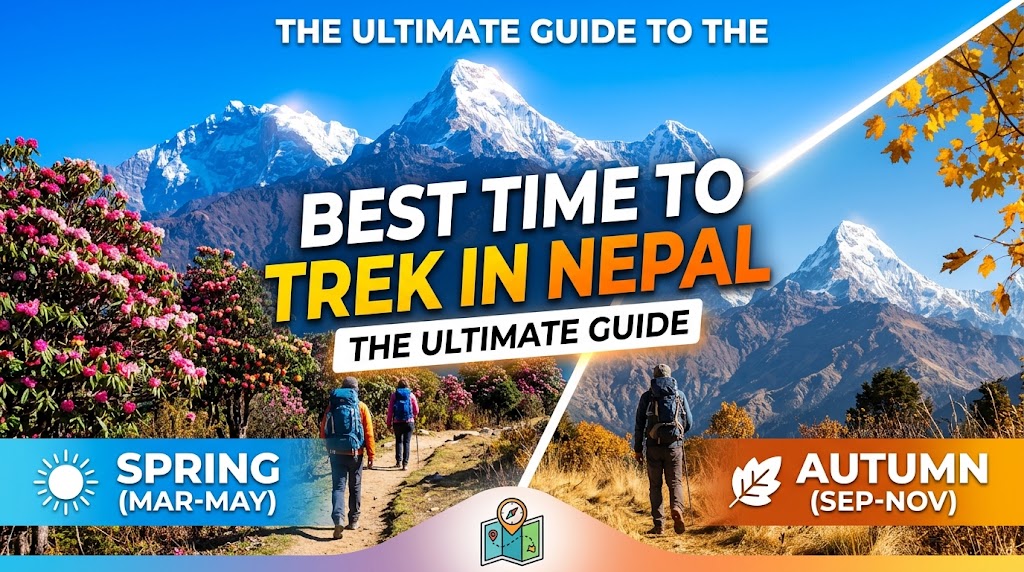
The Ultimate Guide to the Best Time to Trek in Nepal
From the world’s highest peaks in the Everest region to the dramatic valleys of the Annapurna Circuit and the remote beauty of Manaslu, Nepal is the premier trekking destination on Earth. However, the Himalayas dictate their own rules: the success, safety, and enjoyment of your journey depend largely on timing.

Nepal’s trekking calendar is shaped by the South Asian monsoon and extreme altitude variations. This comprehensive guide breaks down the seasons, month-by-month conditions, and regional microclimates to help you choose the ideal time for your Himalayan adventure.
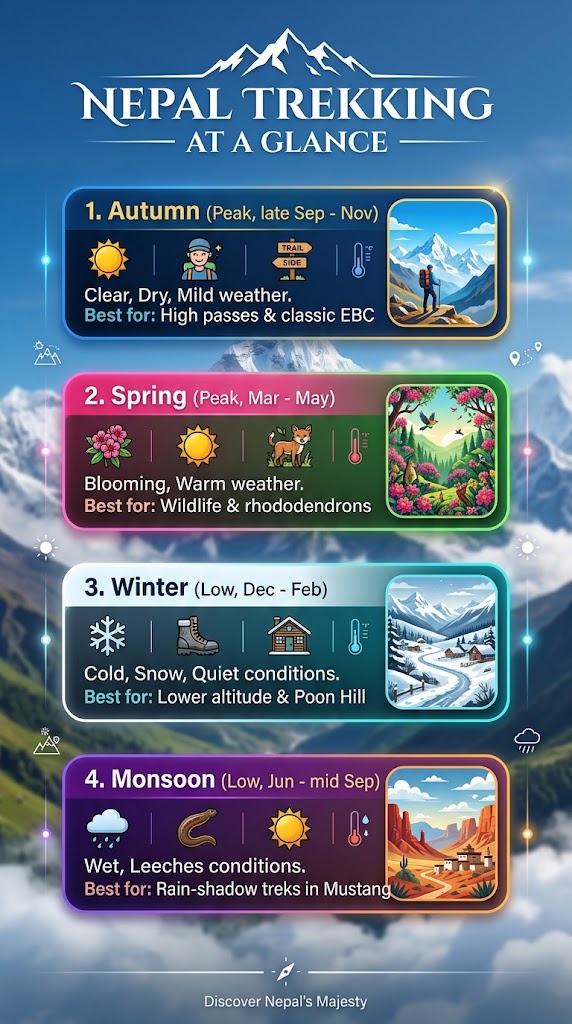
Quick Overview: Nepal Trekking Seasons
The Peak Seasons
Autumn (Late September to November) — The Golden Window
Autumn is widely regarded as the single best time to trek in Nepal. Once the summer monsoon clears in late September, it leaves the atmosphere clean, the air crisp, and the mountain views sharp and uninterrupted.
-
Weather & Temperature: Daytime temperatures at moderate altitudes (2,000–3,500m) are comfortable (12°C to 20°C). Nights become chilly, dropping below freezing (-5°C to -10°C) above 4,500m.
-
Visibility: Autumn provides the most reliable crystal-clear mountain panoramas of the entire year.
-
Festivals: This period coincides with Nepal’s biggest celebrations—Dashain and Tihar (and Mani Rimdu in the Everest region)—adding vibrant cultural festivities to your visit.
-
Drawbacks: Trails and tea houses along classic routes (Everest Base Camp, Annapurna Base Camp) are at their most crowded. Flight tickets to mountain airstrips like Lukla sell out fast, and prices for logistics peak.
Spring (March to May) — The Season of Blooms & Mild Weather
Spring is the second most popular trekking window, characterized by warming days, melting high passes, and blooming valleys.
-
Weather & Temperature: As winter recedes, temperatures steadily rise. Lower elevations are warm and pleasant (16°C to 24°C), while higher elevations are much less biting than in autumn.
-
Flora & Fauna: The hillsides come alive with expansive forests of blooming rhododendrons (Lali Gurans, Nepal’s national flower), magnolias, and wild orchids, particularly in the Annapurna and Langtang regions.
-
Mountaineering Energy: Spring is Everest climbing season; the base camps are buzzing with international expedition teams, creating a vibrant mountaineering atmosphere.
-
Drawbacks: Pre-monsoon haze can occasionally build up in the afternoons, slightly reducing distant visibility compared to autumn. Brief afternoon showers can occur in late May.
The Off-Peak Seasons
Winter (December to February) — Crisp Skies & Solitude
Winter brings dry, stable weather and clear blue skies, but with severe cold and heavy snowfall at high altitudes.
-
Best Suited For: Lower-altitude treks (below 3,500–4,000m) such as Ghorepani Poon Hill, the Langtang Valley (lower reaches), Pikey Peak, and the Kathmandu Valley Rim.
-
Conditions: High mountain passes (e.g., Thorong La, Cho La, Larkya La) are frequently blocked by heavy snow and ice, and many high-altitude tea houses close down for the winter.
-
Why Go: Trails are peaceful and empty, lodging is easy to secure, and photography conditions on sunny winter mornings are pristine.
Summer / Monsoon (June to Mid-September) — The Rain-Shadow Haven
The Indian monsoon brings heavy daily rainfall, cloud cover, landslides on mountain roads, flight delays, and active leeches on lower trails. Most standard routes are not recommended during these months.
-
The Exception (Rain-Shadow Treks): Certain northern Himalayan regions lie behind massive mountain barriers that block monsoon clouds. These areas remain dry, arid, and ideal for summer trekking:
-
Upper Mustang: A high-altitude desert featuring preserved Tibetan-Buddhist culture, ancient walled cities, and cave monasteries.
-
Upper & Lower Dolpo: Rugged, remote valleys and turquoise lakes like Phoksundo.
-
Nar Phu Valley: High alpine valleys north of the Annapurna range.
-
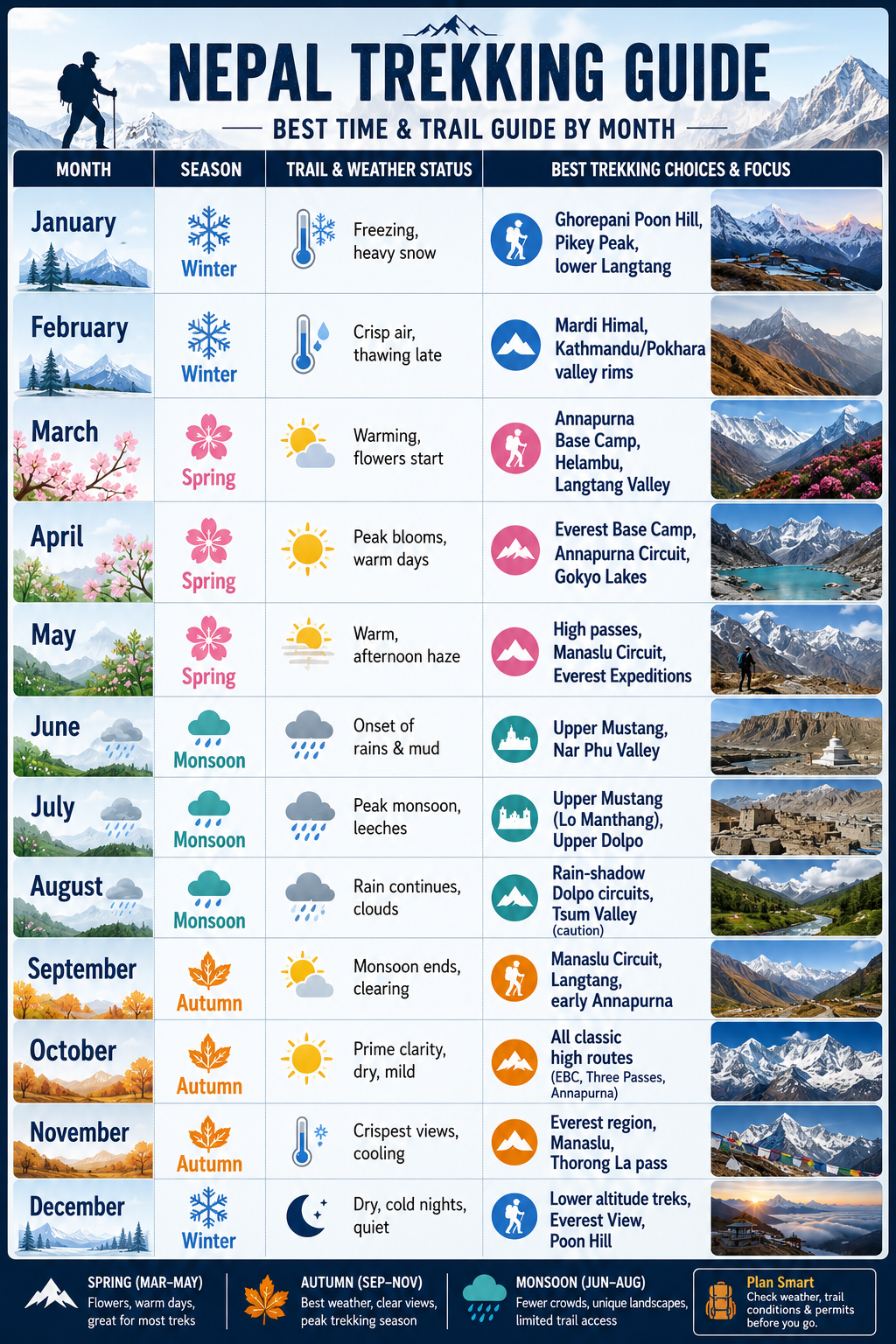
Month-by-Month Breakdown
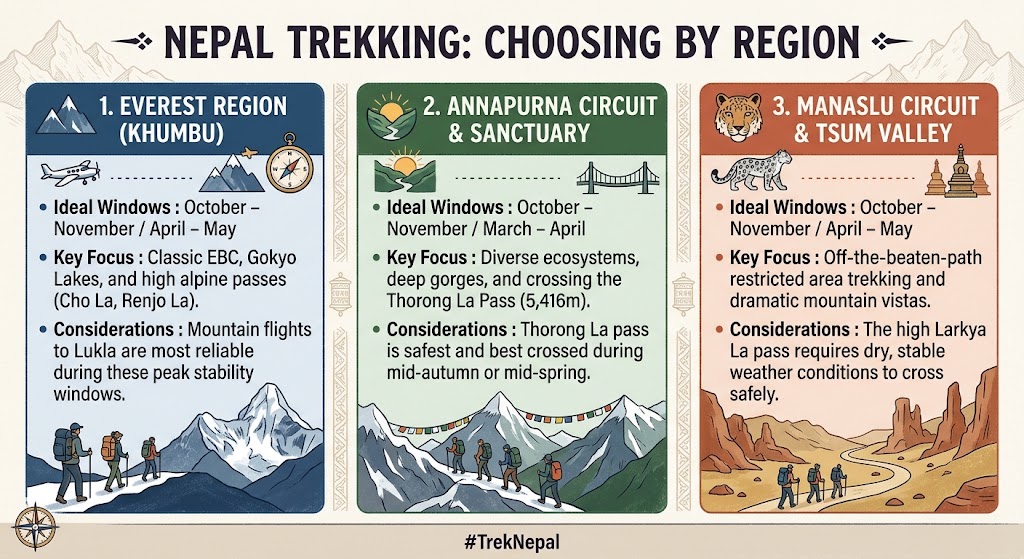
Choosing by Region
Practical Packing & Planning Tips
-
Layering is Crucial Regardless of Season: In both spring and autumn, temperatures can swing by more than 20°C between a sunny afternoon walk and a freezing night at 4,000m+. Invest in a four-season sleeping bag and a quality down jacket.
-
Buffer Days for Flights: If your trek involves mountain flights (e.g., Kathmandu/Ramechhap to Lukla, or Pokhara to Jomsom), factor in 1–2 buffer days to account for weather-related flight holds.
-
Book Peak Seasons Early: For October and April treks, reserve guides, permits, and internal transport well in advance to secure optimal schedules.
-
Acclimatization First: Regardless of the time of year, pace yourself, schedule dedicated acclimatization rest days, and follow the rule of sleeping no more than 300–500m higher per day once above 3,000m.