Political Crisis or Rebirth? Nepali Congress Special Convention Enters Decisive Closed-Door Session
KATHMANDU — The Nepali Congress (NC), Nepal’s oldest and largest political party, is currently at a crossroads. Today, January 12, 2026, the party’s Second Special General Convention entered its highly anticipated “closed-door session” at Bhrikutimandap, Kathmandu.

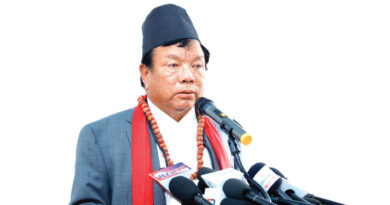
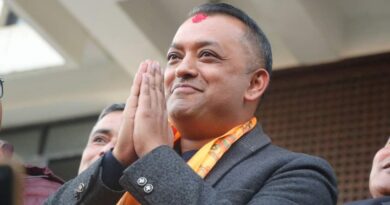
This convention is not just a meeting; it is a direct challenge to the traditional leadership. Spearheaded by the “rebel” General Secretaries Gagan Thapa and Bishwa Prakash Sharma, the event is taking place despite official opposition from Party President Sher Bahadur Deuba and the establishment faction.
The Catalyst: The “Gen-Z” Uprising
The roots of this special convention lie in the political earthquake of September 2025. Following massive youth-led protests (the “Gen-Z Movement”) that toppled the then-government, a wave of “anti-establishment” sentiment swept the nation.
Thapa and Sharma argued that the Nepali Congress must undergo a “fundamental transformation” to survive the upcoming March 2026 elections. Backed by signatures from over 54% of General Convention representatives (approx. 2,488 delegates), they invoked Article 17(2) of the party charter to force this special gathering.
Inside the Closed-Door Session (Monday, Jan 12)
Today’s session is where the real “surgery” of the party begins. Delegates have been divided into nine thematic groups to deliberate on four explosive pillars:
-
Statute Amendment: A proposal to radically change the party’s internal laws.
-
Leadership & Policy: The most contentious issue—whether to change the top leadership before the March 5 elections.
-
Governance Reform: Measures to tackle internal corruption and ensure transparency.
-
Contemporary Issues: Addressing the demands of the youth and the “new” political landscape of 2026.
Gagan Thapa’s “Political Manifesto”
In a bold move last evening, Gagan Thapa presented a political document that proposes a strict “One-Two-Three-Four” term-limit policy:
-
One term as Party President.
-
Two terms as Prime Minister.
-
Three terms as a Minister.
-
Four terms as a Member of Parliament (MP).
“The Nepali Congress statute clearly states that nothing is beyond the ambit of the general convention,” Thapa told the crowd. “It is the convention that chooses leaders, and it is the convention that can also change them.”
The “Establishment” Boycott
Notably absent from the stage were President Sher Bahadur Deuba, Acting President Purna Bahadur Khadka, and several senior leaders. The establishment faction has labeled the convention “unauthorized,” arguing that since the 15th Regular General Convention is already set for May 2026, this special session is a “divisive” move that could split the party.
However, the high turnout—reportedly over 60% of delegates—has signaled to analysts that the “rebel” faction holds significant ground.
What Happens Next?
If the closed session concludes with a majority vote for leadership change, an Election Committee could be formed as early as tomorrow to facilitate a fresh vote for the party presidency. This would essentially pit the youth-favourite Gagan Thapa against the veteran Sher Bahadur Deuba in a battle for the soul of the party.