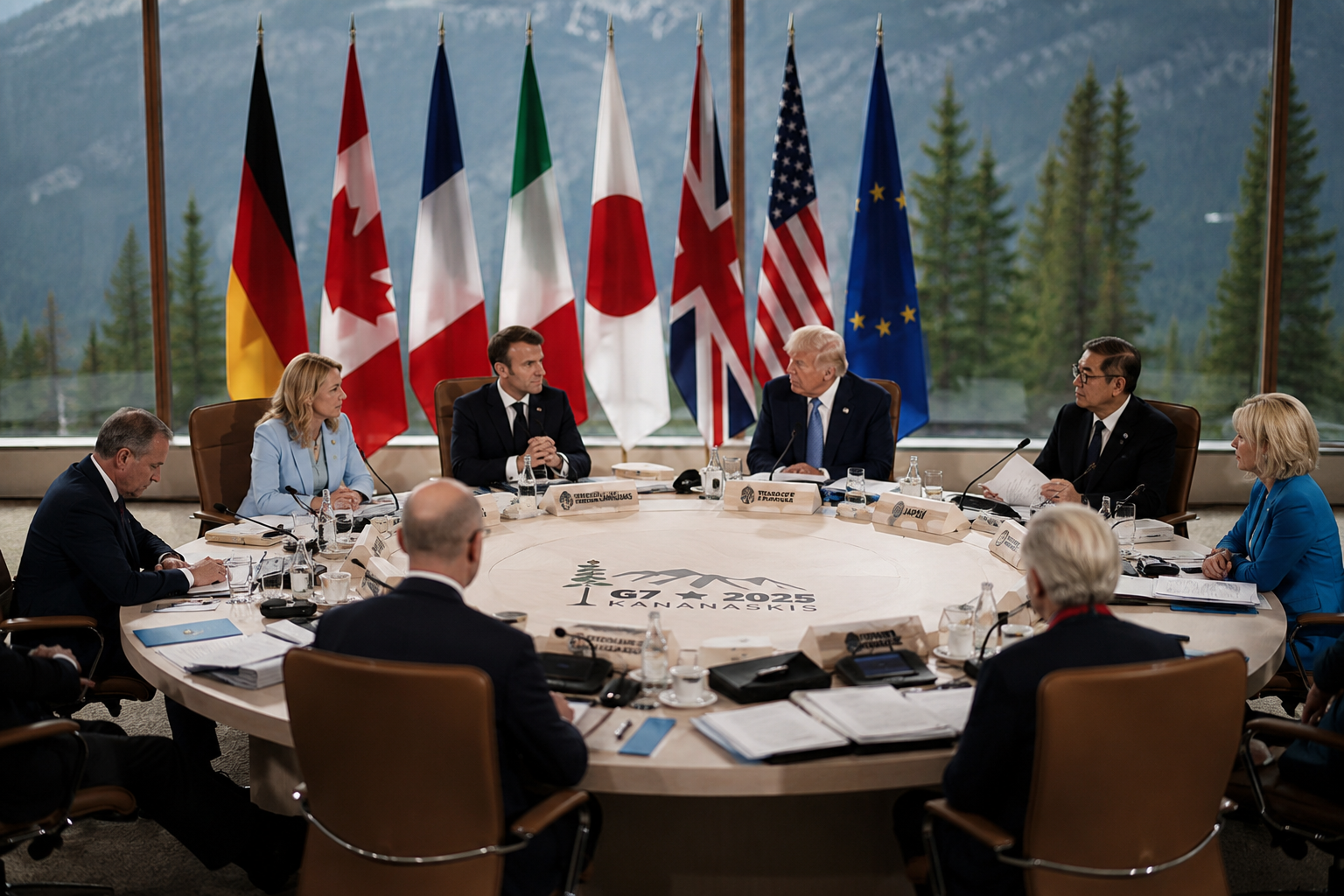
G7 Leaders Intensify Focus on Ukraine-Russia Conflict Amid Renewed Push for Peace and Security
Leaders of the Group of Seven (G7) nations have placed the ongoing Ukraine-Russia conflict at the center of discussions during this year’s summit, signaling renewed international efforts to pursue peace negotiations while strengthening global security cooperation.

Meeting amid continued geopolitical tensions and concerns over regional stability, heads of state from the world’s leading industrialized democracies emphasized the urgent need for a diplomatic pathway that could help bring an end to more than four years of conflict. The summit has provided a platform for leaders to assess the current situation on the ground, coordinate support for Ukraine, and explore potential frameworks for future peace talks.
In a joint statement, G7 representatives reaffirmed their commitment to Ukraine’s sovereignty and territorial integrity while underscoring the importance of maintaining international unity in addressing security challenges posed by the prolonged war. Leaders also discussed measures aimed at enhancing defense cooperation, safeguarding critical infrastructure, and strengthening resilience against emerging security threats.
The conflict continues to have far-reaching consequences beyond Eastern Europe, affecting global energy markets, food supplies, and economic stability. As a result, G7 members highlighted the need for coordinated international action to mitigate humanitarian impacts and support recovery efforts in affected regions.
Diplomatic sources indicated that several leaders advocated for increased engagement with international partners and multilateral organizations to create conditions conducive to meaningful negotiations. While significant obstacles remain, the renewed focus on diplomacy reflects growing international recognition that a sustainable resolution will require both political dialogue and long-term security guarantees.
The summit discussions also addressed broader concerns related to global security architecture, including cyber threats, defense modernization, and strategic cooperation among allied nations. Analysts view these conversations as part of a wider effort to adapt international security frameworks to an increasingly complex geopolitical environment.
As the G7 summit concludes, attention will turn to whether the commitments and initiatives announced by participating nations can help advance diplomatic efforts and contribute to greater stability in Europe and beyond. For now, the gathering has reinforced the conflict’s position as one of the defining international challenges of the current era.