
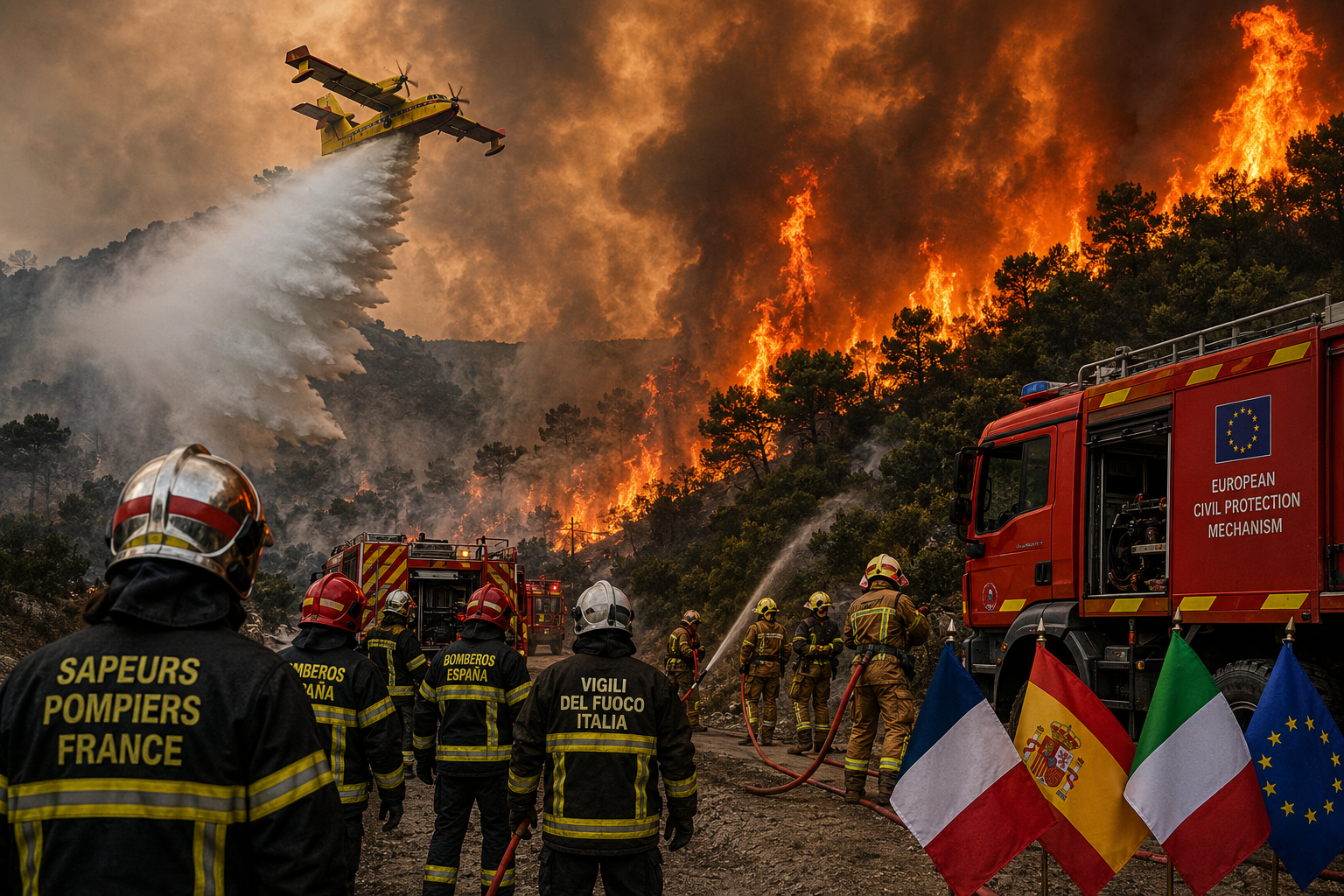
Europe’s Wildfire Crisis Deepens as France and Neighboring Nations Wage Relentless Battle Against Massive Blazes
PARIS — France and neighboring European countries are engaged in an unprecedented battle against massive seasonal wildfires as scorching temperatures, prolonged drought, and strong winds continue to fuel fast-moving blazes across large stretches of southern Europe. Thousands of firefighters, supported by aircraft, military units, and international emergency crews, are working around the clock to contain fires that have forced widespread evacuations, destroyed forests, and threatened communities across the region.

France remains at the center of the crisis, with some of the largest fires burning in the country’s southwest and Mediterranean regions. Emergency officials have deployed thousands of firefighters, water-bombing aircraft, helicopters, and specialized wildfire units to protect residential areas and vital infrastructure. Authorities have ordered the evacuation of thousands of residents and tourists as flames advanced dangerously close to populated communities.
The severity of the situation has prompted neighboring European nations—including Spain, Italy, Germany, Portugal, Belgium, and other members of the European Union Civil Protection Mechanism—to provide additional firefighting aircraft, personnel, and technical support. The coordinated multinational response reflects the growing scale of wildfire emergencies that increasingly overwhelm national resources during the peak summer season.
Spain continues to battle multiple major wildfires across several provinces, while Italy has intensified firefighting operations in Sicily and other southern regions. Emergency responders across southern Europe are facing exceptionally difficult conditions as temperatures soar above seasonal averages and dry vegetation creates ideal conditions for rapidly spreading fires.
Meteorologists warn that a combination of record-breaking heat, low humidity, and powerful winds has significantly increased the wildfire risk across much of western and southern Europe. Climate scientists note that such prolonged and intense fire seasons are becoming more frequent as climate change contributes to hotter summers, extended droughts, and increasingly volatile weather patterns.
Beyond the immediate destruction of forests and wildlife habitats, thick smoke has spread across large areas, degrading air quality and posing health risks to millions of residents. Transportation networks have experienced disruptions, while tourism-dependent regions face economic losses as campsites, hiking trails, and recreational facilities remain closed for safety.
The European Union has activated cross-border emergency assistance, enabling member states to rapidly deploy firefighting aircraft, equipment, and specialized crews wherever the threat is greatest. Officials say international cooperation has become essential as simultaneous wildfires increasingly affect multiple countries during the summer months.
Authorities continue urging residents to follow evacuation orders, avoid outdoor activities that could ignite new fires, and remain alert as weather forecasts indicate that extreme heat conditions are likely to persist. Emergency services warn that even small sparks can rapidly develop into uncontrollable wildfires under the current conditions.
As Europe confronts another devastating wildfire season, environmental experts emphasize that strengthening forest management, investing in wildfire prevention, improving emergency preparedness, and accelerating climate adaptation strategies will be critical to reducing the impact of future disasters. With firefighters still battling dozens of active blazes across the continent, officials caution that the crisis is far from over.


