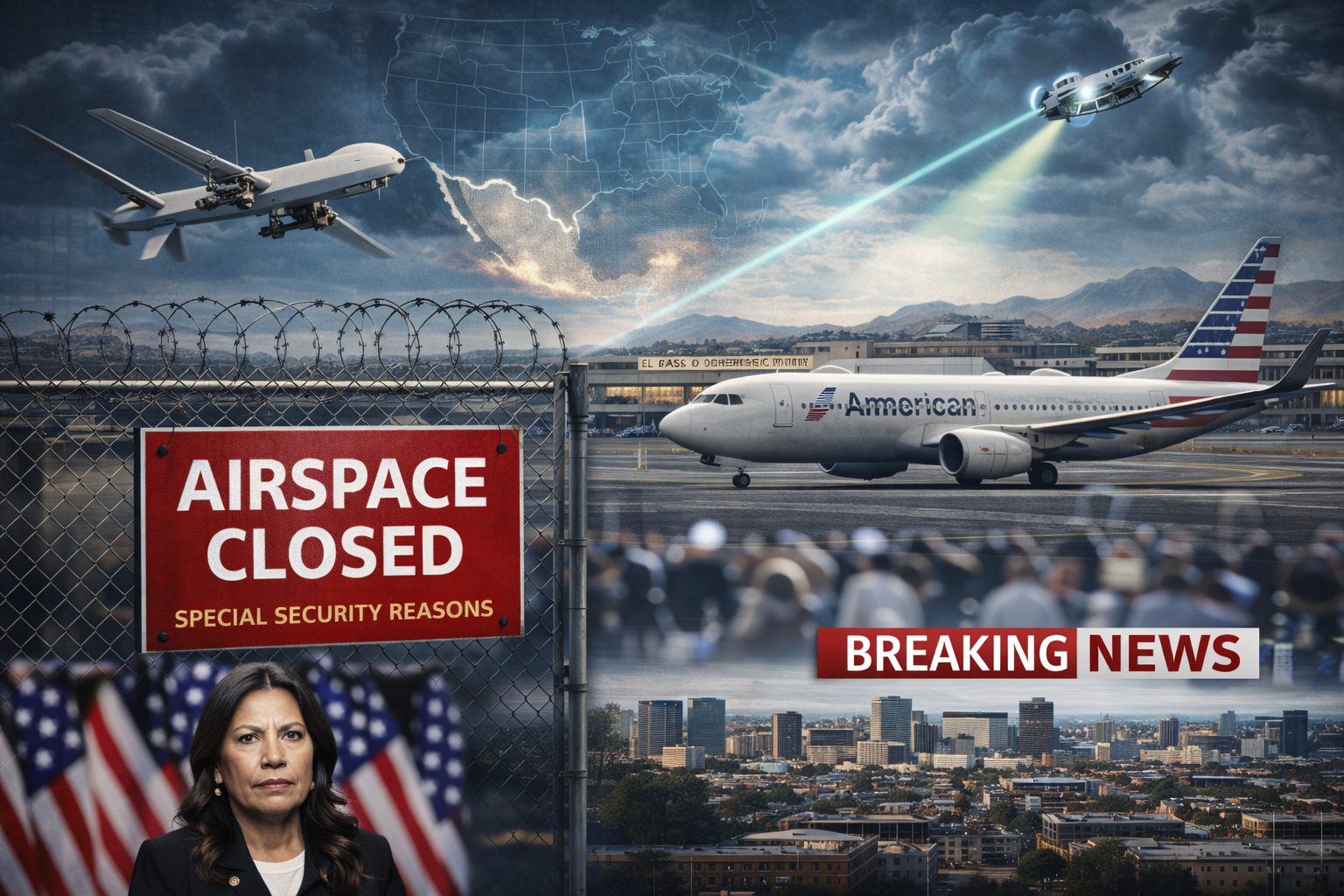
El Paso Airspace Shutdown: Federal Missteps and Security Claims Spark Backlash
El Paso, Texas — In a move that stunned residents, airlines, and local officials, the Federal Aviation Administration (FAA) unexpectedly imposed a temporary closure of the airspace over El Paso International Airport early this week, prompting widespread disruption and intense scrutiny of U.S. air safety protocols.

The FAA initially announced a 10-day grounding of all flights to and from El Paso — covering commercial, cargo, and general aviation — citing “special security reasons,” an action not seen since post-9/11 airspace restrictions. The closure ignited confusion among travelers and airline operators alike, as most received no prior notice before the Federal Aviation Administration Notice to Airmen (NOTAM) took effect.
However, the restriction was lifted mere hours later, with the FAA and U.S. Transportation Secretary stating there was no remaining threat to commercial aviation and that flights would resume as normal.
Cartel Drone Threat or Miscommunication?
According to senior U.S. officials, the dramatic airspace shutdown stemmed from an alleged breach of U.S. airspace by drones reportedly operated by Mexican drug cartels near the El Paso region, leading to precautionary measures by federal agencies. Transportation Secretary Sean Duffy stated that the FAA and Department of Defense acted swiftly to address the situation, neutralizing the potential threat.
Despite these claims, the sudden reversal of the flight ban — initially slated to last until February 20 — raised significant questions about the planning, coordination, and communication between federal agencies. Critics argue that inter-agency breakdowns in communication contributed to unnecessary travel disruptions and public alarm.
Further underscoring the complexity of the incident, U.S. military sources confirmed the deployment of a counter-drone laser system near Fort Bliss, adjacent to El Paso International Airport, which was tied to the sequence of events leading to the airspace halt. The laser’s use reportedly triggered safety concerns that precipitated the FAA’s decision, though later assessments concluded the risk to civilian flights had passed.
Local and Political Backlash
Local leaders, including Congresswoman Veronica Escobar, condemned the lack of prior notice and transparency surrounding the decision, calling for clearer protocols and better communication between federal aviation authorities and regional stakeholders. Many community members echoed these concerns on social media, describing the closure and rapid reversal as chaotic and poorly explained.
The incident has also rekindled broader debates about border security and the increasing use of advanced technologies by both criminal organizations and government agencies. While cartel-associated drones have been a growing concern in recent years, airspace closures of this magnitude remain rare and highly impactful, complicating regional travel and commerce.
Economic and Community Impact
El Paso International Airport is a critical transportation hub for West Texas and Northern Mexico, handling millions of passengers annually. The short-lived grounding of flights disrupted schedules for major carriers such as Southwest, American, Delta, and United, and also affected cargo movements essential to cross-border trade.
Local businesses, tourism stakeholders, and residents expressed frustration at the abrupt travel halts, citing economic repercussions from canceled and delayed flights. Some analysts suggest that even temporary disruptions can have ripple effects across regional economies that rely on consistent air connectivity.
Looking Ahead
As flights resume and operations return to normal, El Paso officials and federal authorities face renewed pressure to explain the decision-making process and ensure that future security actions are executed with greater clarity and coordination. The episode has drawn national attention, highlighting the delicate balance between aviation safety, border security, and public confidence in governing institutions.
The El Paso community — a city deeply connected to international travel, commerce, and binational relations — now awaits answers and policy adjustments that can prevent similar disruptions in the future while maintaining safety standards in an era of evolving aerospace threats.