Nepal : The Momo Nation
Momo, a type of Tibetan dumpling localized by the Nepalese people, holds a special place in the hearts and palates of Nepalis and visitors alike. This beloved street food, deeply embedded in Nepalese culinary culture, is more than just a snack; it is a symbol of the country’s rich culinary diversity and heritage.

The momo has its roots in Tibetan cuisine, believed to have been brought to Nepal by Tibetan immigrants as well as the local Newar Traders of the Kathmandu Valley. Over time, it has been adapted and transformed by the Nepalese, incorporating local flavors and ingredients, and has become a quintessential part of Nepal’s food culture.
Traditionally, momo is made with a simple dough of flour and water. The filling, however, offers a wide array of choices:
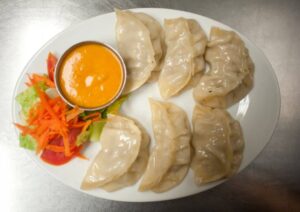
- Meat Fillings: Buff (buffalo meat) is the most traditional, but chicken, pork, and goat meat are also popular.
- Vegetarian Fillings: For vegetarians, fillings often include finely chopped vegetables such as cabbage, carrots, and onions, mixed with tofu or paneer, and flavored with ginger, garlic, and a variety of spices.
Momo can be prepared in several ways:
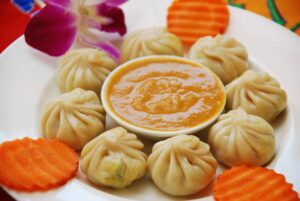
- Steamed Momo: The most common variety, steamed to perfection in large metal steamers.
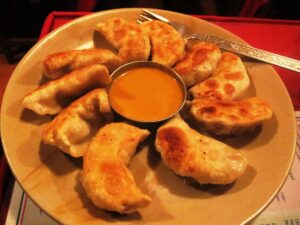
- Fried Momo: These dumplings are deep-fried to give a crispy texture.

- Kothey Momo: A combination of steamed and fried, these are first steamed and then pan-fried to achieve a crispy bottom.
Dipping Sauces
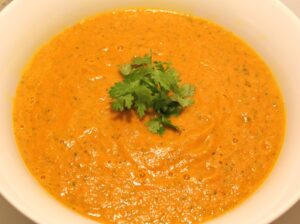
A crucial component of the momo experience is the dipping sauce, known as achar in the native language. This spicy tomato-based sauce typically includes ingredients like tomatoes, sesame seeds, garlic, and green chilies, adding a tangy and spicy kick that complements the momo perfectly. Variations of achar might include cilantro, mint, and sometimes even ground peanut for added texture and flavor.
Momo is not just street food in Nepal; it is a culinary tradition deeply woven into the fabric of daily life. It is a popular choice for family gatherings, celebrations, and casual snacks. Many families have their own secret recipes passed down through generations, making each momo experience unique.
The streets of Nepal, especially in urban areas like Kathmandu, Patan, and Pokhara, are lined with momo stalls. These bustling stalls attract locals and tourists alike, offering a quick and delicious meal at any time of day. The affordability and accessibility of momo make it a favorite among all age groups.
Eating momo is often a communal activity in Nepal. It is common to see groups of friends and families gathered around a steaming platter of momos, enjoying each other’s company as much as the food. This communal dining experience enhances the enjoyment of momo, making it not just a meal but a social event.
Momo Beyond Nepal
The popularity of momo has transcended Nepal’s borders, making its way into neighboring countries like India, Bhutan, and Tibet, and even further afield to global cities with Nepalese communities. Internationally, momo has been embraced by food enthusiasts for its rich flavors and versatile nature. Many Nepalese restaurants around the world feature momo on their menus, introducing this beloved dish to a broader audience.
Momo, with its rich history, diverse fillings, and cultural significance, is more than just a street food in Nepal. It is a culinary icon that represents the country’s ability to adapt and innovate while staying true to its roots. Whether steamed, fried, or served with a spicy achar, momo continues to be a beloved dish that brings people together, both in Nepal and beyond.