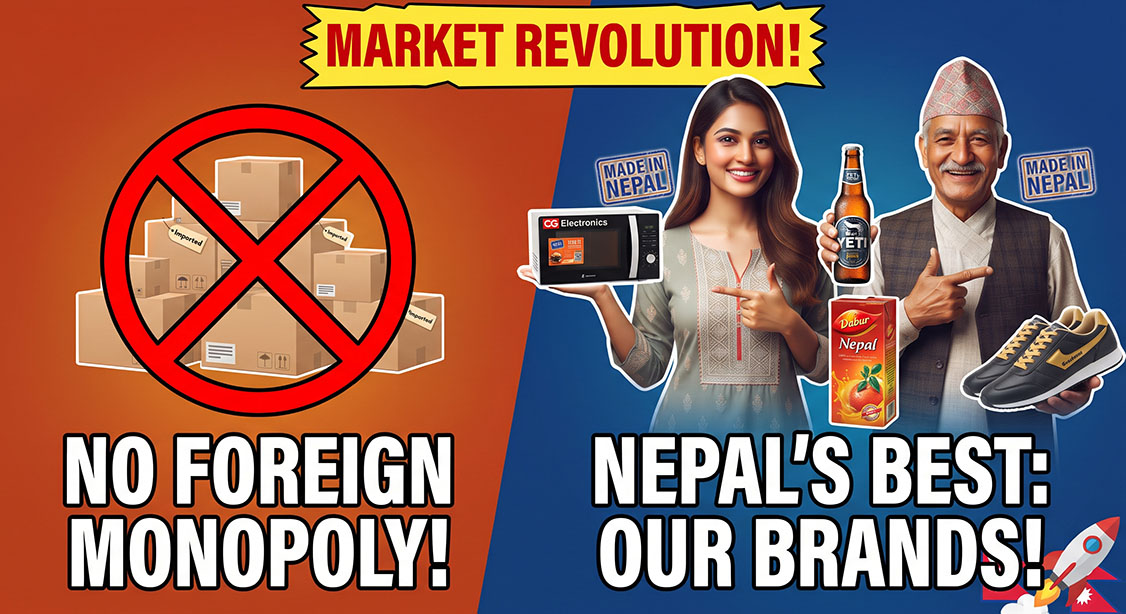
Nepali Domestic Brands Increasingly Challenge Foreign Dominance Across Consumer Sectors
For decades, Nepal’s consumer market was overwhelmingly dominated by imported goods—ranging from basic household staples to apparel, footwear, beverages, and electronics—with many shoppers equating foreign labels with superior quality. Today, however, a notable shift in consumer psychology and improved domestic manufacturing standards are enabling homegrown Nepali brands to steadily break foreign monopolies and capture substantial market share across multiple everyday sectors.

Growing Footprint Across Key Consumer Categories Backed by competitive pricing, modern branding, and quality tailored to local tastes and needs, Nepali manufacturers have built strong footholds across diverse product segments:
-
Home Appliances and Electronics: Domestic conglomerates such as CG (Chaudhary Group) have established a major presence in middle-class Nepali households by offering televisions, refrigerators, washing machines, and small kitchen appliances backed by accessible pricing and nationwide after-sales service networks.
-
Food, Beverages, and Instant Noodles: Nepali instant noodle brands, packaged snacks, energy drinks, and domestic beer and beverage labels have successfully competed head-to-head with multinational imports, not only dominating domestic retail shelves but also expanding into export markets.
-
Footwear, Apparel, and Travel Gear: Local footwear makers, garment producers, and outdoor travel gear brands have shed their traditional image as low-cost alternatives, winning over younger urban consumers with modern designs, durability, and value for money.
-
Two-Wheelers, Television Services, and Daily Essentials: Domestic assembly and brand initiatives in motorcycles, local television service providers, and household consumables have further reduced reliance on foreign competitors.
Changing Consumer Mindset and Economic Impact Market analysts attribute this momentum to both supply-side upgrades—such as modern machinery, improved packaging, and aggressive digital marketing—and a generational shift among Nepali shoppers who increasingly take pride in supporting “Made in Nepal” labels when quality matches international standards.
Economists emphasize that the rise of competitive domestic consumer brands carries significant long-term benefits for Nepal’s economy. By substituting imports in high-volume everyday categories, local industries help retain capital within the country, generate domestic manufacturing and retail employment, and gradually ease pressure on Nepal’s chronically wide trade deficit.