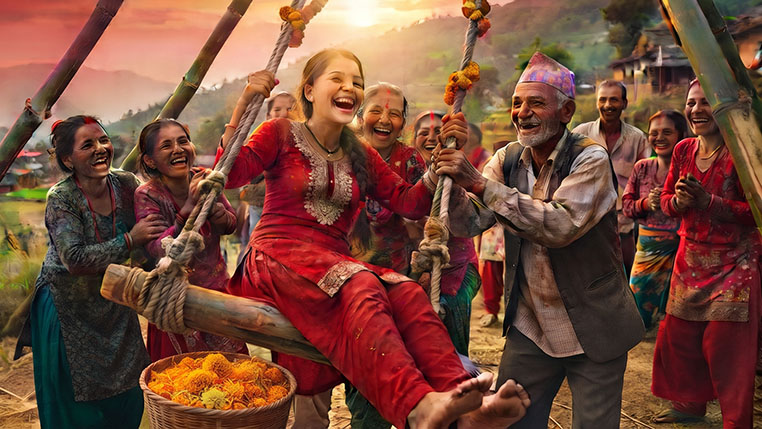
Traditional Linge Ping Swings Revive Community Bonding Amid Fading Dashain Customs
Across Nepal’s hills and villages, the arrival of Bada Dashain was once marked by weeks of shared neighborhood labor—clearing overgrown village footpaths, repairing stone staircases, and coating mud-brick homes in fresh red and white clay (rato mato and kamero). While rapid urbanization, out-migration, and modern concrete housing have caused many of those communal preparations to fade, the time-honored tradition of erecting towering bamboo swings—known locally as linge ping—continues to anchor festive solidarity across rural communities.

In districts such as Ramechhap, local youth clubs, elders, and returning migrant workers have come together during the festive week to harvest mature bamboo poles, weave durable ropes from babiyo grass, and raise linge ping swings in open village squares and ridge-top clearings. For generations, the swing has served as far more than simple recreation; it represents a collective effort where neighbors pool physical labor, materials, and local craftsmanship to build a shared gathering space open to everyone regardless of age or background.
According to Nepali cultural belief, rising into the air on a linge ping during Dashain—particularly on the day of Bijaya Dashami—symbolizes leaving the earth behind for a fleeting moment, inviting joy, renewal, and good fortune into the household. Beyond its spiritual symbolism, the swing site functions as an informal town square where estranged neighbors reconnect, children wait eagerly in line for their turn, and elders share stories of past festivals.
In recent years, changing lifestyles and labor shortages caused by youth migration abroad have reduced the number of swings built in some settlements, leading cultural observers to worry about the gradual erosion of indigenous Dashain customs. However, local residents note that even where other pre-festival rituals have simplified, the linge ping has found renewed momentum—helped in part by younger generations documenting and sharing videos of village swings on social media platforms.
As families gather across hillsides and courtyards this Dashain, the rhythmic creak of bamboo and laughter around the linge ping stands as a living reminder that even amid shifting modern habits, shared cultural spaces remain vital to keeping Nepal’s rural community spirit alive.