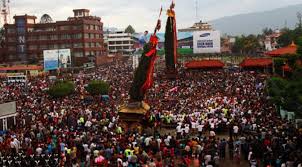
Rato Machindranath Jatra: A Month of Devotion and Heritage
The Rato Machindranath Jatra, also known as the Bunga Dyah Jatra, is one of the most significant and longest-running cultural festivals in the Kathmandu Valley. Celebrated primarily in the historic city of Lalitpur (Patan), this month-long chariot festival is a profound display of Newari culture, faith, and communal harmony. It honors the deity of rain, fertility, and prosperity, serving as a vital thread that weaves together the social and religious fabric of the region.

The Legend and Origin
The origins of the festival are steeped in ancient lore. Legend has it that during the reign of King Narendra Dev (around 640–683 AD), the Kathmandu Valley suffered a catastrophic 12-year drought. The severe famine was attributed to the sage Gorakhnath, who, feeling disrespected by the people of the valley, had captured the Nagas (serpent deities responsible for rain) and was meditating upon them, holding them hostage.
Astrologers advised the King that the only way to break the drought was to bring Gorakhnath’s teacher, Machindranath (also known as Karunamaya or Bunga Dyah), from Assam to the valley. Upon his arrival, the compassionate Machindranath’s presence caused Gorakhnath to rise out of respect for his guru. The Nagas were released, and rain finally returned to the parched land. To express gratitude, the King initiated the annual tradition of pulling a grand chariot in the deity’s honor.
A Syncretic Deity
One of the most remarkable aspects of Rato Machindranath is its syncretic nature. The deity is revered simultaneously as:
-
A Hindu Saint: As Machindranath, a powerful yogi and teacher of Gorakhnath.
-
A Buddhist Bodhisattva: As Karunamaya (Avalokitesvara), the embodiment of compassion.
Because of this dual identity, the festival draws devotees from both Hindu and Buddhist traditions, illustrating the peaceful, pluralistic society of the Newar community.
The Chariot: A Masterpiece of Engineering
The centerpiece of the festival is the Rath (chariot), a monumental structure standing approximately 60 feet tall. Its construction is a marvel of traditional craftsmanship:
-
Design: The chariot is built using ancient, nail-less engineering techniques. It is held together by intricate joinery, ropes, and cane, allowing the massive structure to remain flexible enough to withstand the vibrations and pressures of being pulled through narrow, winding city streets.
-
Construction: The chariot is painstakingly built at Pulchowk by traditional guilds who treat the process as a sacred duty.
-
Minnath: A smaller chariot dedicated to Minnath (Chakuwa Dyah) accompanies the main chariot throughout the procession.
The Journey Through Patan
The Jatra is not a single-day event but a slow, ceremonial pilgrimage. Once the deity’s idol is installed in the chariot, it is pulled by thousands of devotees through the historic streets of Patan.
-
The Route: The chariot travels from Pulchowk, stopping at major intersections such as Gabahal, Mangal Bazar, Sundhara, and Lagankhel, before finally arriving at the open ground of Jawalakhel.
-
Community Involvement: The pulling of the heavy ropes is considered a virtuous act. Devotees of all ages, genders, and backgrounds join in, believing that contributing to the chariot’s movement brings blessings and good fortune.
-
Yakah Misaya Bhujya: On a specific day during the procession, the chariot is pulled exclusively by women, a significant cultural practice known as Yakah Misaya Bhujya.
Bhoto Jatra
The festival concludes at Jawalakhel with the Bhoto Jatra (Festival of the Vest). In the presence of the President of Nepal, the living goddess Kumari, and thousands of spectators, a mysterious, jewel-studded black vest (bhoto) is displayed from the four corners of the chariot.
According to myth, the vest belonged to the King of the Nagas, who gifted it to a farmer for healing his wife. After the farmer lost the vest, it was found in the possession of a demon, leading to a dispute. Unable to resolve it, the people offered the vest to Machindranath. It is shown to the public every year in the hope that the rightful owner will come forward with proof to claim it.
Significance in Modern Times
Beyond its religious roots, the Rato Machindranath Jatra is deeply tied to the Hiti system (traditional water management). The festival dates and route were historically synced with the maintenance of the city’s ancient ponds, canals, and stone spouts (dhunge-dharas), ensuring that the city’s water infrastructure was cleaned and ready for the monsoon season.
Today, the festival remains a resilient symbol of identity. It is a time when the community reunites, traditional music like the Dhimey fills the air, and families gather for Bhoye (traditional feasts), reaffirming the enduring connection between the people, their heritage, and the environment.