The Silent Crisis: Why Climate Change is the Defining Public Health Challenge of 2026
As we move through 2026, the intersection of climate change and public health has shifted from a future-looking concern to an immediate, daily reality. With global temperatures consistently tracking at or near record levels, the environmental crisis is no longer just about melting ice caps or rising sea levels—it is about the fundamental stability of human health systems.

From the acceleration of heat-related illnesses to the shifting geography of infectious diseases, understanding this link is vital for governments, healthcare providers, and citizens alike.
The Rising Heat Threshold: A Direct Threat to Mortality
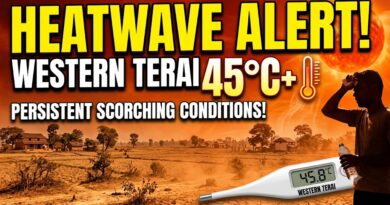
The recent run of record-breaking years has made extreme heat the most immediate climate-health hazard. With over half of the world’s land surface experiencing increased dangerous heat stress, our physiological limits are being tested.
-
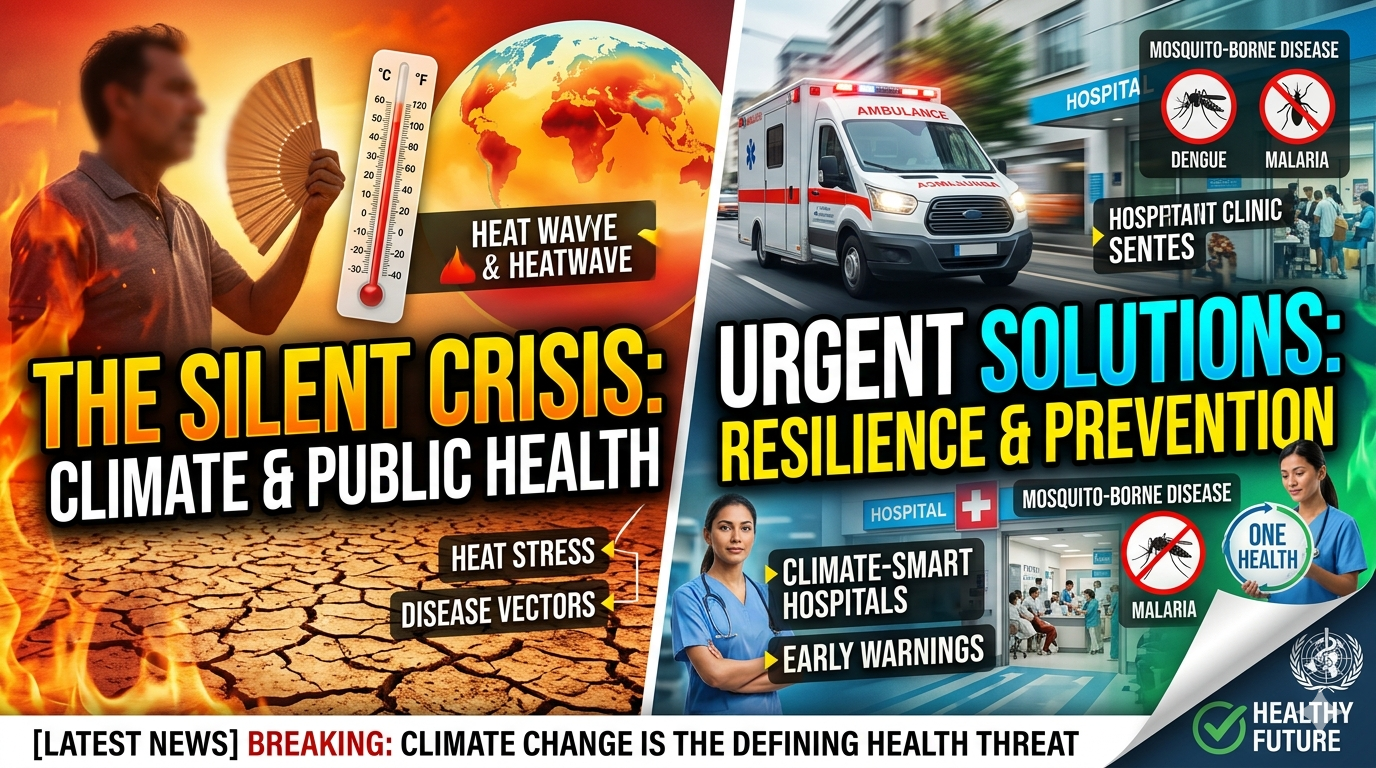
Beyond Discomfort: Extreme heat is now a primary driver of cardiovascular and respiratory failure. As urban areas trap heat (the “urban heat island” effect), the risks for vulnerable populations—the elderly, children, and those with pre-existing conditions—have spiked.
-
The Systemic Strain: Hospitals are increasingly dealing with mass casualty events from heatwaves. This is causing operational strain on emergency services, which are often unprepared for the simultaneous surge in patients and infrastructure failures (such as grid instability).
Shifting Disease Landscapes: The Expansion of Vectors
A warming planet is expanding the range of disease-carrying vectors. As ecosystems change, diseases that were once geographically restricted are now appearing in new regions.
-
Vector-Borne Diseases: There has been a significant rise in the global transmission potential for illnesses like dengue, malaria, and chikungunya. Mosquitos and ticks are migrating to higher altitudes and latitudes, bringing with them health risks to populations that lack natural immunity.
-
The “One Health” Imperative: Global health authorities are increasingly advocating for a “One Health” approach, which recognizes the interdependence of animal, human, and environmental health. Surveillance must now integrate monitoring of wildlife, livestock, and climate data to predict outbreaks before they hit human populations
The Hidden Cost: Mental Health and Displacement
Climate change is not just a physical threat; it is a profound psychological one.
-
Climate Anxiety and Trauma: The loss of livelihoods, displacement due to flooding, and the constant threat of extreme weather events are fueling a rise in mental health issues. “Eco-anxiety” is now recognized by health organizations as a legitimate clinical concern affecting younger generations.
-
Forced Migration: As agricultural land becomes degraded and coastal areas face rising tides, health systems are being tasked with supporting large, displaced populations who often lack access to basic medical services, sanitation, and clean water.
Building Resilience: From Reactive to Proactive
To manage these risks, public health frameworks are undergoing a necessary evolution:
-
Climate-Smart Healthcare: Health systems are being urged to “decarbonize.” This means building hospitals that can withstand extreme weather (energy-resilient) while simultaneously reducing the carbon footprint of medical supply chains.
-
Early Warning Systems: Data-driven early warning systems for extreme heat and disease outbreaks are proving to be the most cost-effective way to save lives. By linking meteorological data directly to public health alerts, cities can deploy cooling centers and preventive health measures in real-time.
-
Policy Integration: Health must be at the center of climate policy. Decisions on urban planning, transport, and energy are now, inherently, public health decisions.
The consensus among the global scientific community is clear: climate change is the single biggest health threat facing humanity. However, the transition to a sustainable future offers a “lifeline.” By investing in resilient, low-carbon, and equitable health systems, we can protect citizens from the worst effects of a warming world while simultaneously improving health outcomes globally.
The path forward requires a shift from viewing climate change as a distant environmental problem to treating it as a core public health priority that demands immediate, integrated action.