
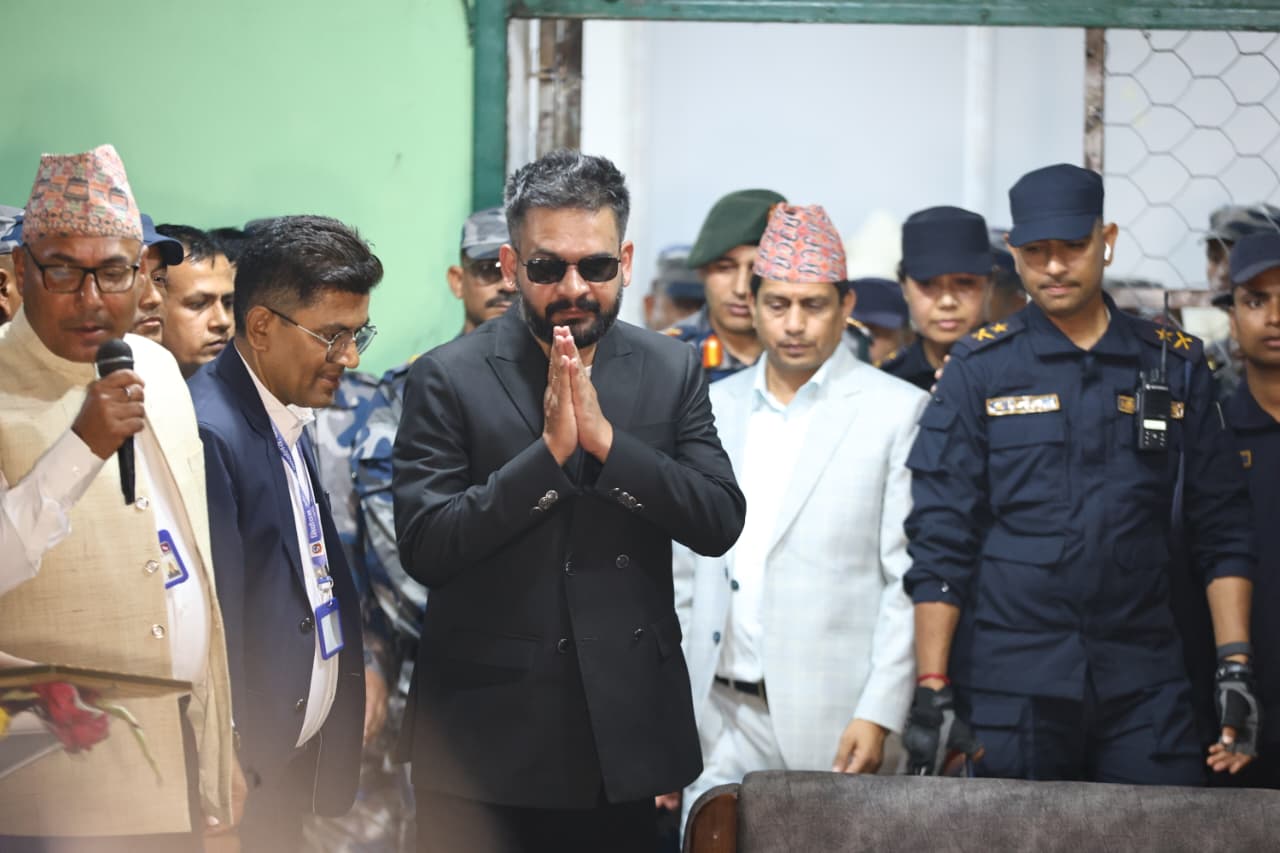
RSP Secures Historic Supermajority; Balen Shah Poised to Become Nepal’s Youngest PM
KATHMANDU – In a political earthquake that has decimated the country’s established leadership, the Rastriya Swatantra Party (RSP) has secured a historic mandate in the 2026 General Elections. With the final counting of Proportional Representation (PR) votes concluding on Wednesday, the RSP is projected to hold 182 to 183 seats in the 275-member House of Representatives—landing just shy of a two-thirds supermajority.

The “Blue Wave” swept through nearly every province, fueled by a massive turnout from Gen Z voters and a nationwide rejection of the traditional political guard.
The Numbers: A Decisive Mandate
According to the Election Commission (EC), the RSP’s dominance is unprecedented under the current mixed electoral system.
| Party | FPTP Seats (Direct) | PR Seats (Projected) | Total Seats |
| Rastriya Swatantra Party (RSP) | 125 | 58 | 183 |
| Nepali Congress (NC) | 18 | 19 | 37 |
| CPN-UML | 9 | 16 | 25 |
| Nepal Communist Party (NCP) | 8 | 9 | 17 |
| Others / Independent | 5 | 8 | 13 |
The RSP received over 5.1 million votes in the PR category, nearly 48% of the total valid votes cast, effectively ending the era of fragile coalition governments.
The Fall of the Titans
The 2026 election will be remembered for the “Giant Killers.” RSP leader Balen Shah, who resigned as Kathmandu Mayor in January to contest the polls, defeated four-time former Prime Minister KP Sharma Oli in Jhapa-5 by a staggering margin of nearly 50,000 votes.
Similarly, heavyweight candidates from the Nepali Congress and CPN-UML faced embarrassing defeats in their long-held bastions. The NC’s prime ministerial hopeful, Gagan Thapa, lost his seat in Sarlahi-4 to RSP’s Amaresh Kumar Singh.
The Rise of Balen Shah
At 35, Balen Shah is set to become the youngest Prime Minister in Nepal’s history and the first of Madhesi origin. His campaign, centered on “service delivery over ideology,” resonated with an electorate exhausted by decades of political instability and corruption.
“The bell has not just rung; it has cleared the path for a new Nepal,” Shah told supporters in Damak following his victory. “This mandate is not for celebration, but for the immediate work of institutional reform.”
Challenges Ahead
While the RSP enjoys a comfortable majority to pass legislation, analysts warn of a “lopsided Parliament.”
-
Weak Opposition: With the Nepali Congress and UML reduced to their lowest tallies in history, there are concerns regarding the checks and balances within the House.
-
Upper House Constraints: The RSP currently has no representation in the National Assembly (Upper House), which remains dominated by the NC and UML, potentially leading to legislative hurdles for constitutional amendments.
The Election Commission is expected to submit the final report to the President within the week, after which the process for government formation under Article 76(1) of the Constitution will begin.


