
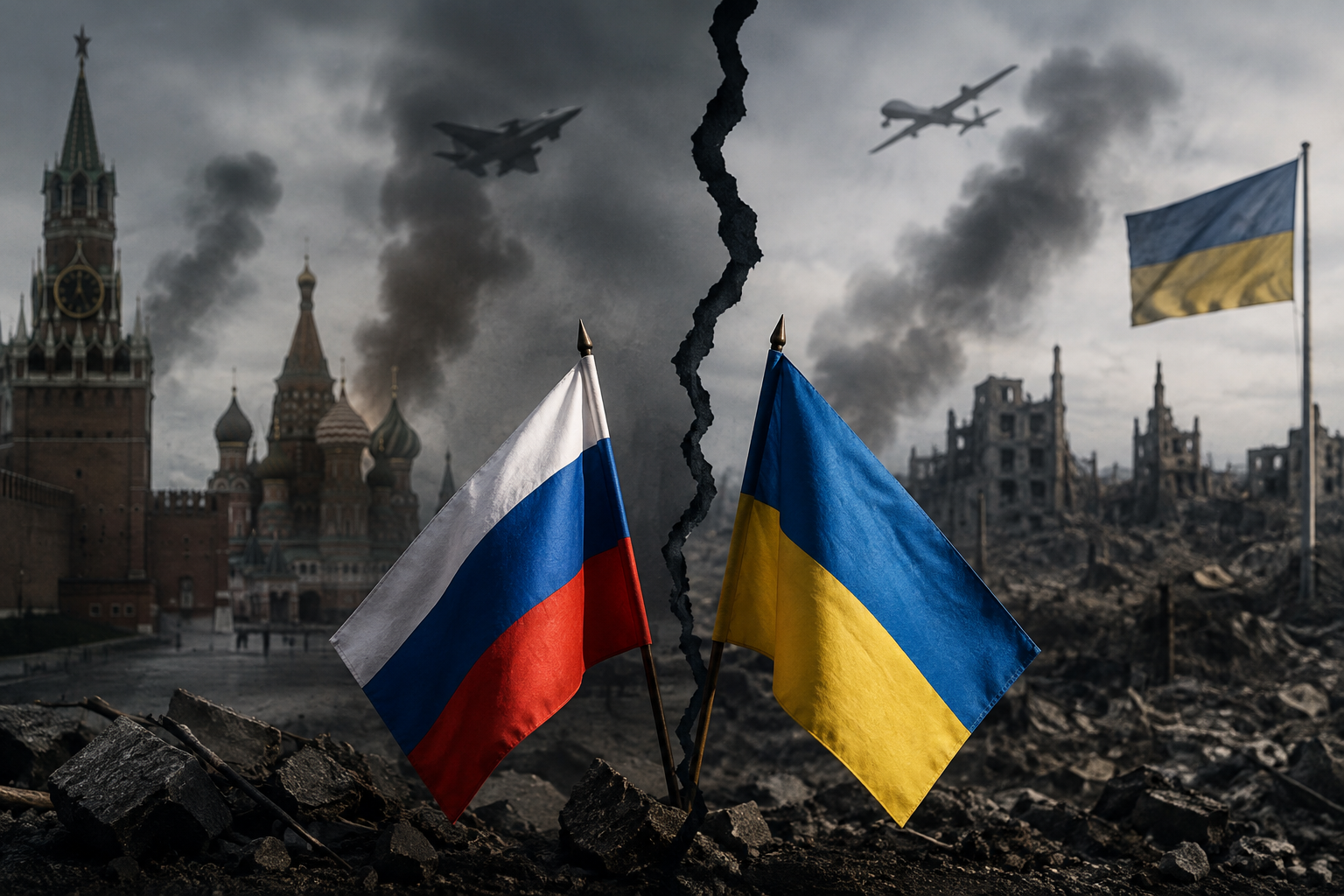
Russia–Ukraine War: Fighting Intensifies as Peace Efforts Stall
KIEV/MOSCOW — The Russia–Ukraine war is entering another dangerous phase as both sides intensify long-range drone and missile attacks while diplomatic efforts to secure a ceasefire remain stalled. The latest escalation has seen Ukraine launch one of its largest aerial offensives against targets inside Russia, while Russian forces continue heavy strikes on Ukrainian cities and critical industrial infrastructure.

Ukraine’s latest drone campaign targeted areas around Moscow and other Russian regions, with Russian authorities reporting deaths and significant damage. Ukrainian officials have increasingly emphasized the development of longer-range domestic weapons as Kyiv seeks to place greater pressure on Russian military and logistical infrastructure. At the same time, Russia has continued large-scale missile and drone attacks against Ukraine, with recent strikes killing civilians and damaging important facilities, including the ArcelorMittal steel plant in Kryvyi Rih.
The violence is unfolding against a backdrop of renewed but uncertain diplomatic activity. Ukrainian President Volodymyr Zelenskyy said Kyiv has submitted proposals to U.S. negotiators aimed at ending the war and has urged Washington to increase pressure on Moscow. However, direct peace negotiations between Russia and Ukraine have remained stalled, with Russian Foreign Minister Sergei Lavrov saying Moscow would welcome negotiations while accusing the United States of supporting Ukrainian attacks—an allegation Washington has not accepted.
The Black Sea has also emerged as another potential flashpoint. Russia recently rejected proposals for a limited ceasefire covering civilian shipping, while attacks involving commercial and maritime infrastructure have raised concerns over regional security and global grain supplies. The rejection underscores the difficulty of achieving even narrowly focused agreements while the broader war continues.
Meanwhile, Europe is preparing to increase economic pressure on Moscow. EU foreign policy chief Kaja Kallas said the bloc is preparing what could become its most far-reaching sanctions package against Russia, potentially expanding the number of sanctioned Russian entities by roughly one-third. The move reflects Europe’s continuing effort to restrict Russia’s ability to sustain its war effort while maintaining support for Ukraine.
With attacks intensifying, diplomatic channels uncertain and both countries expanding their long-range strike capabilities, the prospect of a rapid end to the conflict remains limited. For Ukraine, securing additional air-defense systems and international support remains critical; for Russia, maintaining military pressure while resisting further Western sanctions remains a central objective. The coming weeks could therefore prove decisive in determining whether the conflict moves toward renewed negotiations—or enters another period of intensified warfare.


