Nepal Budget 2083/84 Sparks Hope for Economic Transformation and National Growth
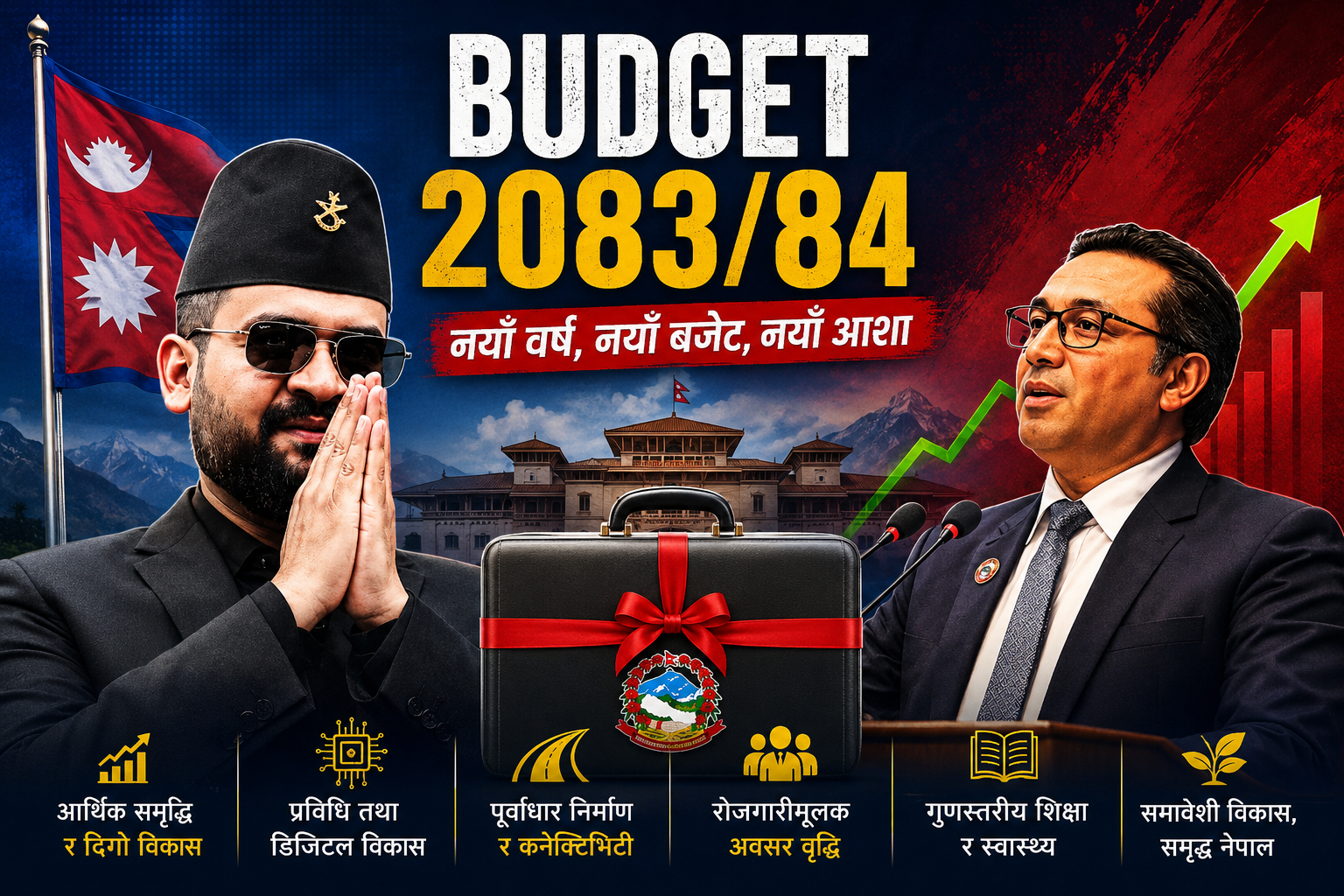
Kathmandu, Nepal — The Government of Nepal has unveiled the national budget for Fiscal Year 2083/84, presenting an ambitious roadmap aimed at accelerating economic growth, strengthening infrastructure, promoting technology-driven development, and improving public services. With a total outlay of Rs 2.124 trillion, the budget is the largest in Nepal’s history and reflects a renewed commitment toward economic reform and prosperity.

Finance Minister Swarnim Wagle presented the budget before the Federal Parliament, outlining a vision focused on private sector growth, employment generation, digital innovation, and efficient governance. The government has set an ambitious target of achieving 7 percent economic growth while maintaining inflation below 6 percent in the coming fiscal year.
One of the most welcomed announcements is the significant tax relief package for citizens. The personal income tax exemption threshold has been doubled to Rs 1 million, while the maximum tax rate has been reduced, providing greater financial flexibility for middle-income earners and encouraging formal economic participation.
The budget also places strong emphasis on modernization and innovation. Plans have been announced to establish an AI Processing Center in Syuchatar, promote digital exports, support startups, and provide fellowships for young technology professionals. These initiatives signal Nepal’s growing ambition to position itself as a competitive player in the digital economy.
Infrastructure development remains a major priority, with substantial investments allocated for roads, energy, irrigation, and regional development projects. The government has also pledged to strengthen hydropower expansion, improve connectivity, and support large-scale development initiatives that can stimulate long-term economic activity and job creation.
In a move aimed at improving governance efficiency, the government has announced structural reforms including the reduction, merger, and restructuring of several public agencies. Officials say these measures will help reduce administrative costs and enhance public service delivery.
The budget further prioritizes health, education, agriculture, tourism, and social security programs. Increased investments in these sectors are expected to strengthen human capital, support rural livelihoods, and create broader opportunities for citizens across the country.
Economic analysts have described the budget as a reform-oriented plan that combines fiscal discipline with growth-focused investments. By encouraging entrepreneurship, supporting technology, expanding infrastructure, and easing the tax burden on citizens, the government aims to create a more dynamic and resilient economy.
As Nepal enters Fiscal Year 2083/84, the new budget has generated optimism among businesses, investors, youth, and development stakeholders. If implemented effectively, the policies announced this year could mark an important step toward a more prosperous, innovative, and self-reliant Nepal.