Spirit Airlines Collapse Sends Shockwaves Through U.S. Aviation Industry
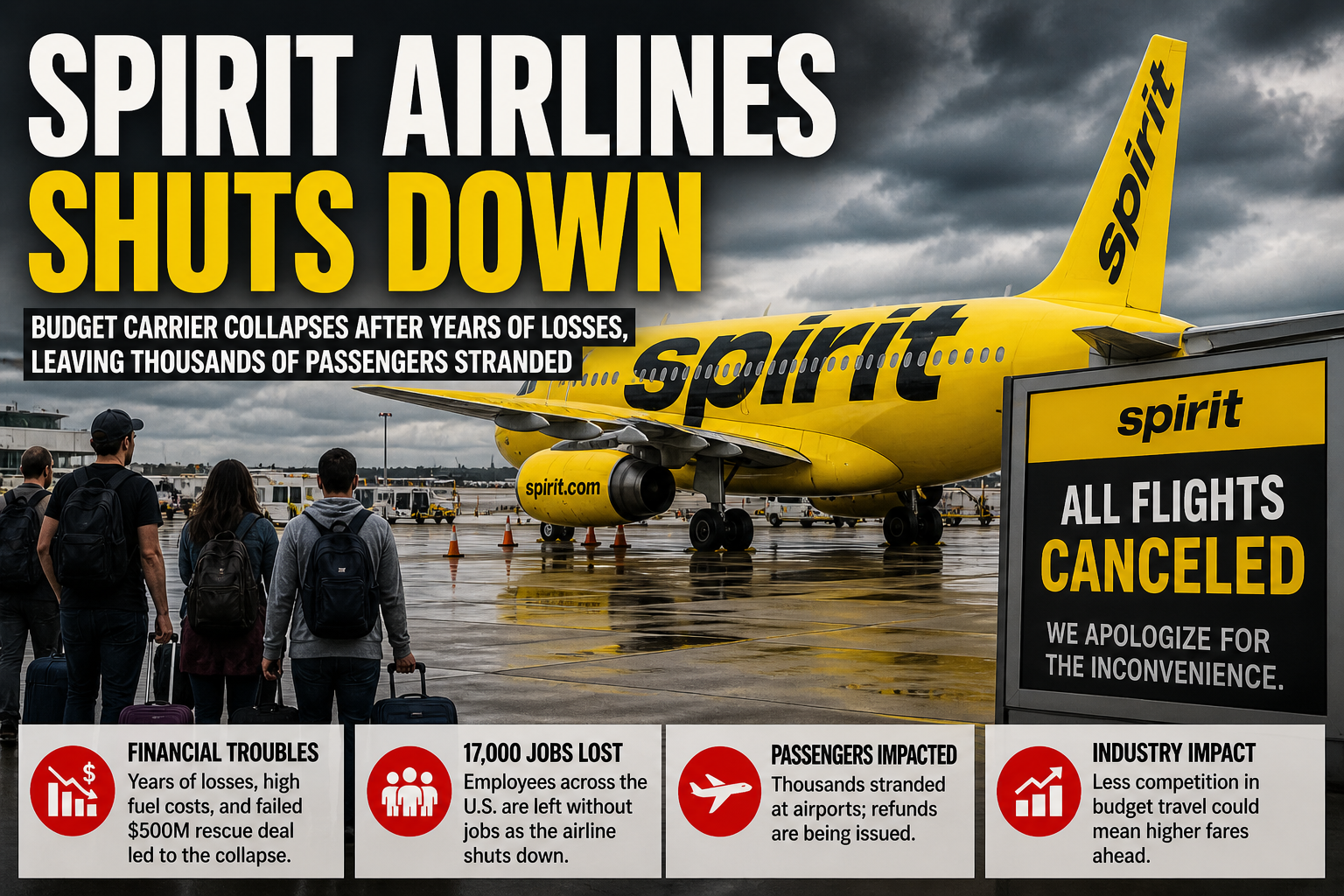
The sudden shutdown of Spirit Airlines in early May 2026 has sent ripples across the United States aviation sector, marking one of the most significant airline failures in recent decades. The ultra-low-cost carrier, known for its budget fares and no-frills model, ceased operations on May 2 after prolonged financial instability and a failed last-minute rescue effort.

The airline’s collapse follows years of mounting pressure from rising fuel costs, increased competition, and structural weaknesses in its business model. Industry analysts point to the combination of volatile global energy prices and declining profit margins as key factors that accelerated the airline’s downfall. The situation worsened after a proposed merger with JetBlue Airways was blocked earlier, removing a critical lifeline that could have stabilized operations.
In the immediate aftermath, operational disruptions were widespread. Thousands of passengers were left stranded across major U.S. airports, scrambling to secure alternative flights, often at significantly higher prices. Competing carriers, including Delta Air Lines and American Airlines, responded by offering limited emergency accommodations and fare adjustments, though capacity constraints limited the overall relief.
The shutdown has also triggered a major labor impact, with approximately 17,000 employees affected. Aviation unions and labor groups have raised concerns over the sudden nature of the closure, highlighting the absence of a structured transition plan for displaced workers.
Financially, the company had been struggling for several years, failing to return to profitability since before the COVID-19 pandemic. Efforts to secure external funding, including a reported $500 million bailout initiative, ultimately collapsed, leaving the airline unable to sustain its operations.
Beyond the immediate disruption, the long-term implications for the aviation market are significant. Spirit Airlines played a crucial role in maintaining price competition, particularly in the budget travel segment. Its exit is expected to reduce low-cost options for consumers, potentially leading to higher airfares across multiple domestic routes.
Meanwhile, regulatory and policy discussions are likely to intensify in Washington, with renewed scrutiny on airline consolidation, competition laws, and financial resilience within the industry. The blocked JetBlue-Spirit merger is already being revisited in public discourse as stakeholders reassess whether stricter antitrust enforcement may have contributed indirectly to the airline’s collapse.
As the industry absorbs the shock, attention has shifted to passenger compensation and financial settlements. Reports indicate that the airline is in the process of issuing refunds to affected customers, although the timeline and completeness of reimbursements remain under close observation.
The collapse of Spirit Airlines underscores broader vulnerabilities within the low-cost aviation model, particularly in times of economic volatility. It also raises critical questions about sustainability, regulatory balance, and the future structure of affordable air travel in the United States.