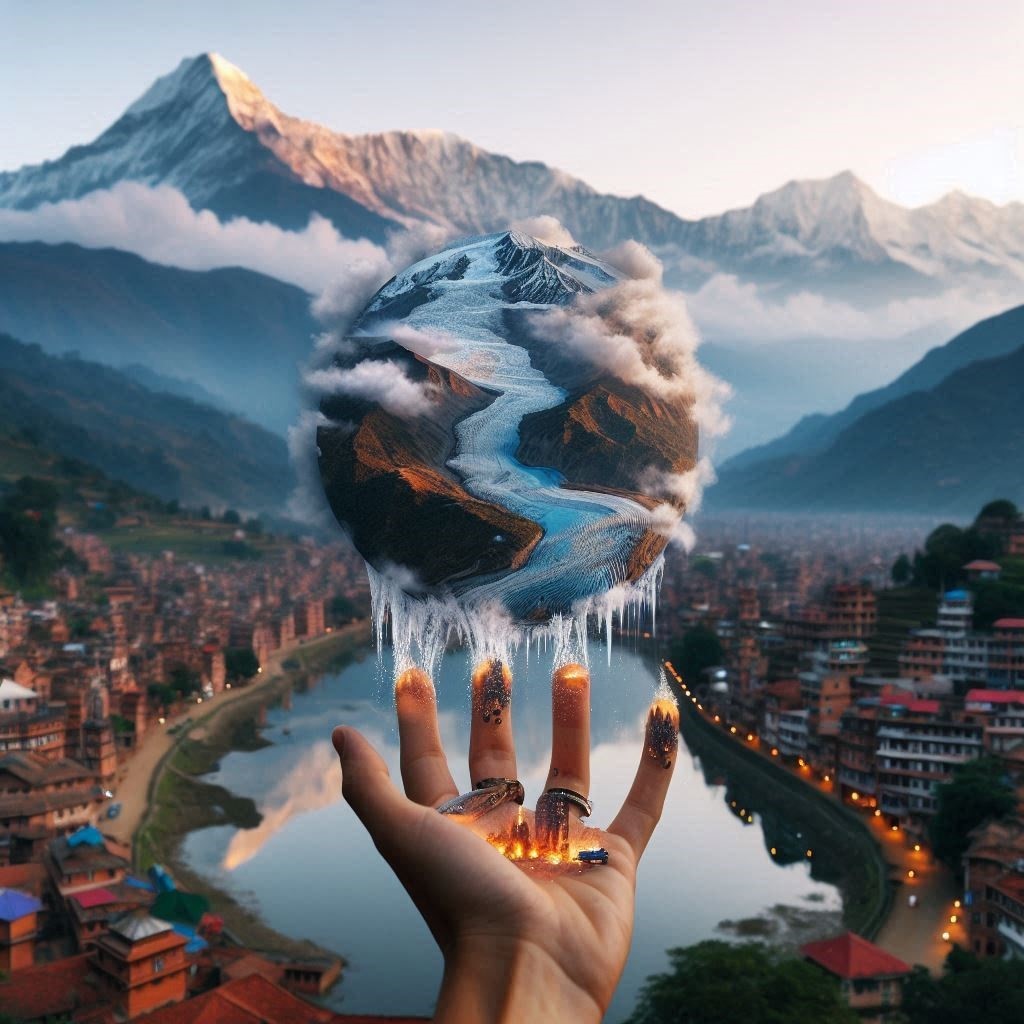
Nepal’s Himalayas Under Threat: How Global Warming is Impacting the roof of the world
Termed as the roof of the world Nepal is a land of breathtaking beauty and diverse ecosystems. However, this very beauty is under threat due to the looming crisis of global warming. The rising temperatures are having a profound impact on Nepal’s environment, jeopardizing its water resources, agricultural productivity, and even the stability of its iconic mountains.

Global warming is having significant impacts on the Nepalese mountains, including:
Rapid Snowmelt and Glacier Retreat:
One of the most visible consequences of global warming in Nepal is the accelerated melting of glaciers. Studies by the International Commission for Snow and Ice paint a grim picture, suggesting a potential disappearance of Himalayan snow by 2035 if no significant action is taken. This rapid retreat of glaciers disrupts the natural flow of rivers fed by glacial meltwater, leading to unpredictable water availability.
Glacial Retreat: Nepal’s glaciers are retreating at an alarming rate. Studies show that glaciers in the Himalayas have shrunk by about 30% since the 1970s. This retreat affects water resources, leading to reduced freshwater availability downstream.
Glacial Lake Outburst Floods (GLOFs): As glaciers melt, they form glacial lakes. These lakes are often dammed by unstable moraines, which can burst and cause catastrophic floods downstream, endangering lives and infrastructure.
Reduced Snowfall: Warmer temperatures result in reduced snowfall, which diminishes snowpack that feeds rivers during dry seasons.
Increased Floods and Landslides:
The melting glaciers also contribute to an increase in extreme weather events like floods and landslides. The fragile mountain slopes become saturated with meltwater, leading to devastating landslides. Similarly, erratic monsoon patterns with intense downpours exacerbate flooding in the lowlands, causing immense damage to infrastructure and agricultural fields.
Water Scarcity and Food Insecurity:
The erratic water flow due to melting glaciers poses a significant threat to Nepal’s water resources. The country relies heavily on meltwater for irrigation, hydropower generation, and domestic use. Decreased water availability during the dry season can lead to water scarcity, impacting agricultural productivity and jeopardizing food security for millions.
Melting glaciers initially increase river flows, but as glaciers continue to shrink, long-term water availability will decrease. This affects agriculture, hydropower, and drinking water supplies.
Impact on Biodiversity and Tourism:
Global warming also disrupts the delicate balance of ecosystems in Nepal. Rising temperatures push certain plant and animal species towards higher altitudes, altering their habitats and threatening biodiversity. This can also impact Nepal’s vibrant tourism industry, which relies heavily on the pristine beauty of its natural landscapes.
- Habitat Shifts: Species that depend on cold environments are forced to move to higher altitudes. This migration disrupts local ecosystems and can lead to loss of biodiversity.
- Alpine Flora and Fauna: Changes in temperature and precipitation patterns threaten alpine plants and animals, some of which are endemic to the Himalayas.
Vulnerable Communities and Unequal Impacts:
The consequences of global warming are not evenly distributed. Communities residing in high-altitude regions and those dependent on agriculture are disproportionately affected by erratic weather patterns and water scarcity. This can exacerbate existing social and economic inequalities.
Adaptation and Mitigation Efforts:
Nepal is actively seeking solutions to combat the challenges posed by global warming. The government has implemented programs to promote sustainable agriculture practices, improve early warning systems for natural disasters, and invest in renewable energy sources. However, international cooperation and significant reductions in global greenhouse gas emissions are crucial to ensure the long-term sustainability of Nepal’s environment.
Agricultural Productivity: Changes in weather patterns, such as erratic rainfall and prolonged droughts, impact agricultural productivity. Farmers face challenges in growing traditional crops, which can lead to food insecurity.
Livelihood Disruption: Many communities in the Nepalese mountains rely on agriculture, livestock, and tourism. Climate change disrupts these livelihoods, forcing people to adapt or migrate.
The majestic Himalayas stand as a stark reminder of the urgency of addressing climate change. Nepal’s struggle against its impacts serves as a microcosm of the global challenge we face. By implementing effective adaptation strategies and working together to mitigate climate change, we can ensure a more secure future for Nepal and its breathtaking mountain ecosystems.
(Article by : Yagyambar Shrestha)